How To Sew a Golf Club Cover w/ Piping | Free Pattern
This golf club head cover is a version of my simple golf club cover. The piping detail around the edges, and binding finished bottom, make this sewing project a little more advanced, but adds more style and gives a more polished look.
I like the piping because it smooths out the curve of the club head cover. I choose to use a color that adds a bit of contrast, but you could make piping and binding from the same fabric as your cover for a more uniform look.
The golf head cover I made has a feminine look at would be perfect for a Mother’s Day gift for a mom who loves to golf.
However, changing up the color of the fabric to a black, brown, dark green, etc. would give this item a more masculine look, making it suitable for a Father’s Day gift.
Just like the simple club head covers, you can alter this pattern to make the covers more seasonal. For the golfer who golfs year-round, they may like a winter set that is insulated to protect the club heads from extreme temperature fluctuations. Or a padded set for travel. Or even a waterproof set for the rainy season.
Gift Giving Ideas
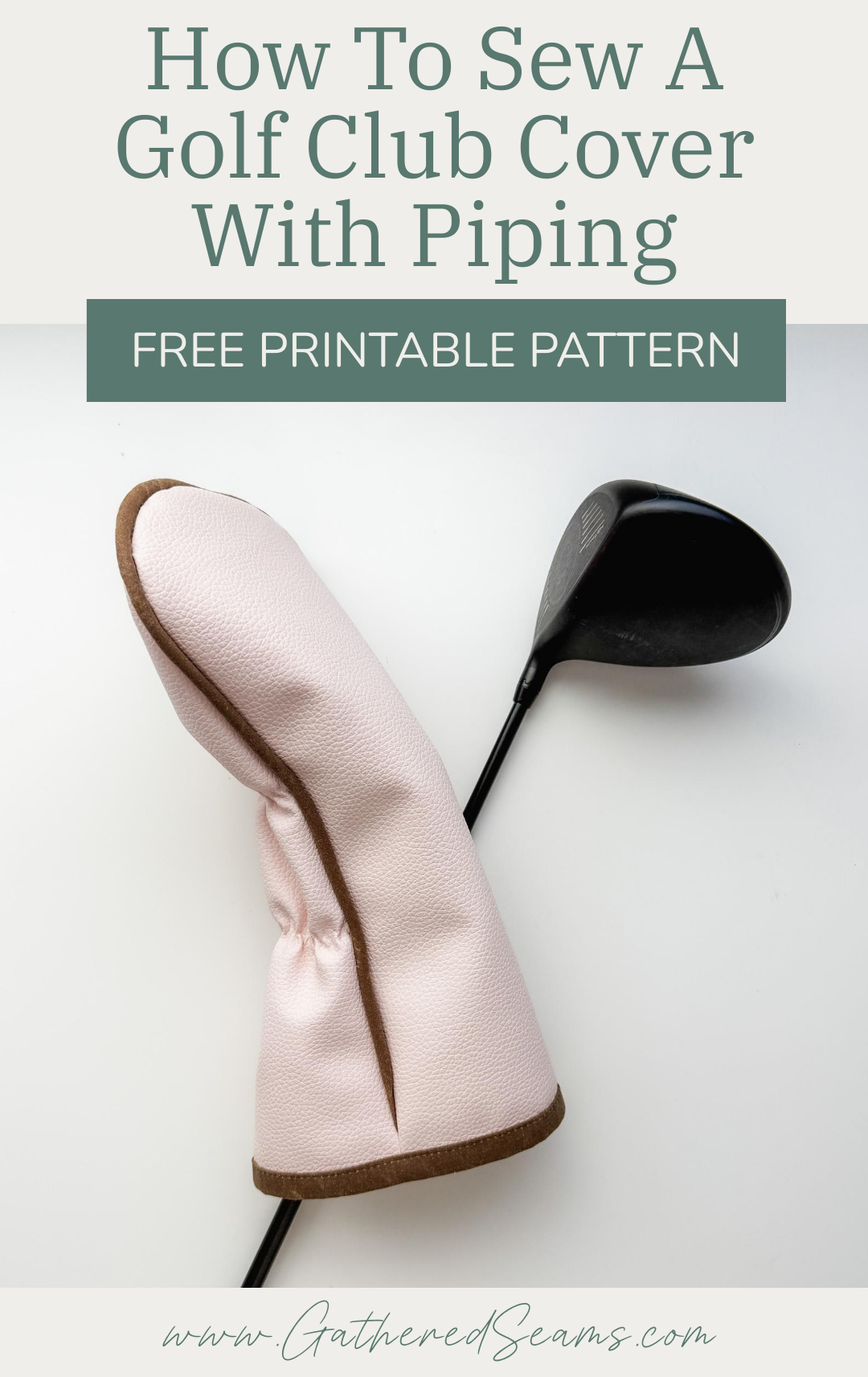
If you plan to sew this as a gift, you may want to add other items. Here are a few ideas:
To sew
- Golf ball holder
- Golf towel
- Golf shoe bag
- Tee holder
To Buy
- Golf balls (fill the golf ball holder with 3 golf balls)
- Golf tees
- Golf glove
- Ball market
- Divot tool
Materials
As an Amazon Associate, I earn from qualifying purchases (see full disclosure here).
- Outer fabric – I chose vinyl because I want my covers to be water-resistant. Stick to fabrics that are durable and won’t be damaged easily by the elements. A few options are:
- Vinyl/PU Leather
- Genuine leather
- Neoprene
- Canvas or waxed canvas
- Heavier-weight nylon
- Lining fabric – choose a soft fabric that won’t scratch clubs. A couple of good options are:
- Fleece
- Sherpa
- Velour
- Minky fabric
- Piping – size depends on desired look (3/16″ is a common size that would be appropriate for this project, however you can go bigger or smaller depending on how much you want the piping to stand out)
- 1/2″ double-fold binding (2″ wide unfolded)
- Optional: stabilizer foam – if the outer fabric you’re using doesn’t have much structure, you may want to fuse a layer of stabilizer foam, fleece batting, or other interfacing to give your club head cover more structure.
- Optional: thermal batting – if you want to protect the golf clubs from temperature fluctuations, you may add thermal batting. Ideal for someone who golfs in extreme heat or in colder temperatures during the winter.
- Elastic (I used 1/2″ wide elastic)
- Thread
- Optional: golf head cover number tags – if you have a machine that embroiders, you may choose to embroider letters or numbers to identify which club is under the cover. Alternatively, you can add a loop to the top of your head cover and add these tags that allow you to change the number on each cover.
Tools
- Sewing machine
- Optional: embroidery machine (to add letters or numbers to the club heads)
- Walking foot (recommended if you’re working with thickier fabric such as vinyl. This is the universal one I purchased for my Baby Lock, which is a different machine than what’s shown in the photos)
- Zipper foot or piping foot (for attaching piping)
- Temporary fabric marker (these are the ones I use)
- Ruler
- Scissors
- Clips/pins
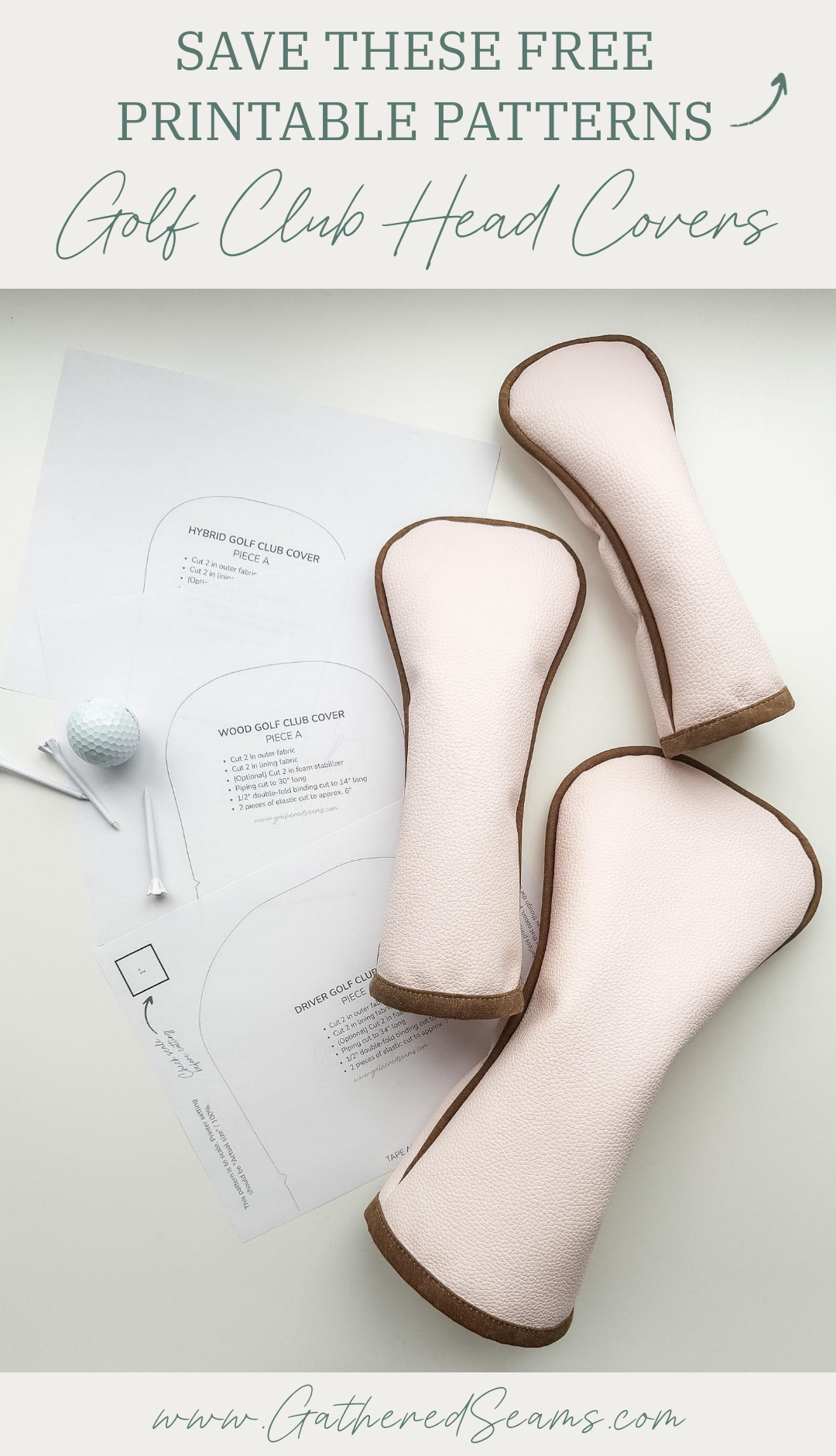
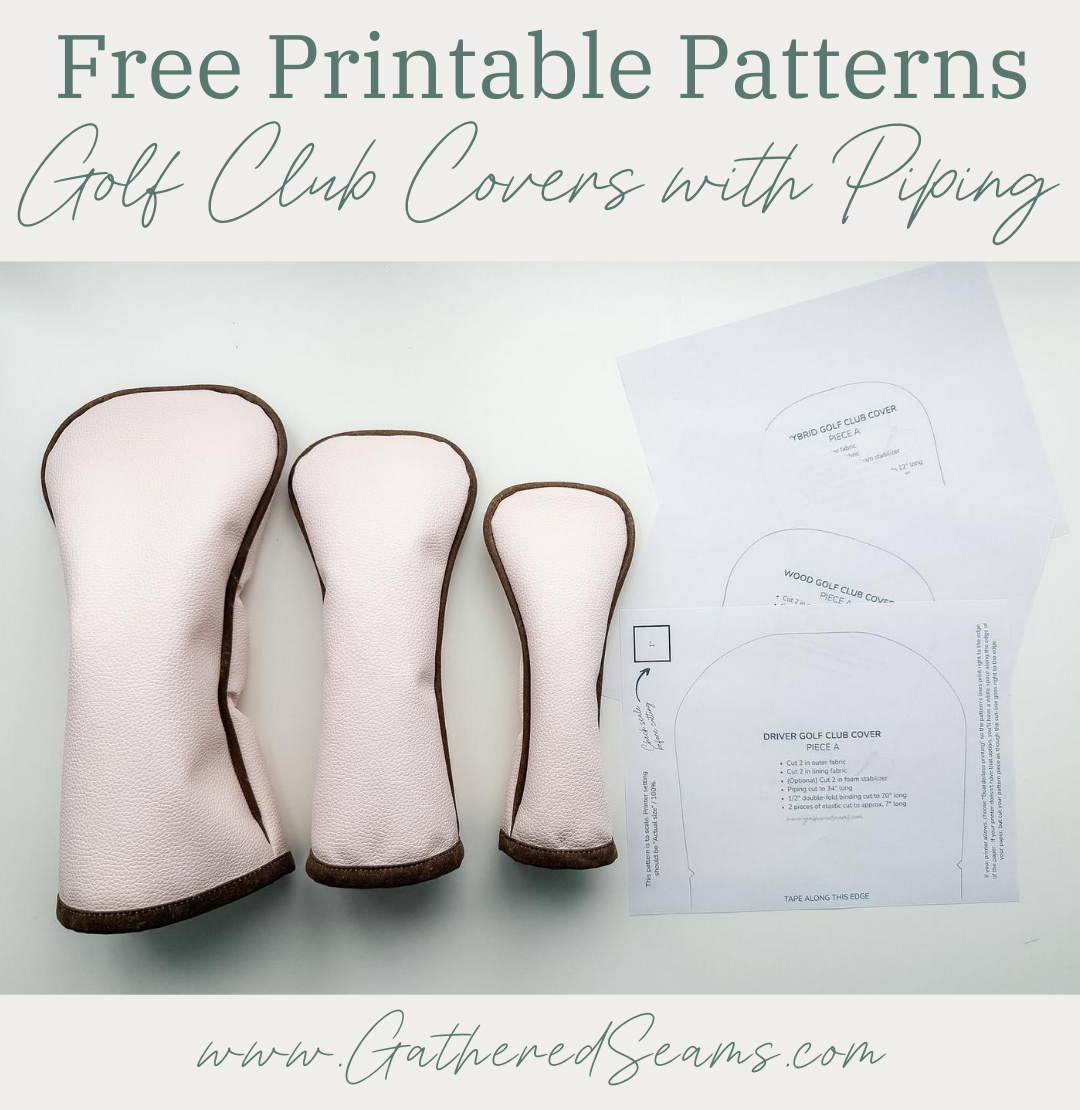
Free printable patterns for a golf club head covers

Steps to sew a golf head cover
Step 1
Download the free pattern, print it, tape the edges together (they should not overlap), and cut out the pattern piece.
Before cutting your fabric, compare your driver/wood/hybrid club head to the printed pattern to ensure the cover is wide enough for your clubs.
I’ve tried these on both my clubs and my husband’s, and they fit both sets, but best to double-check your set before cutting materials.
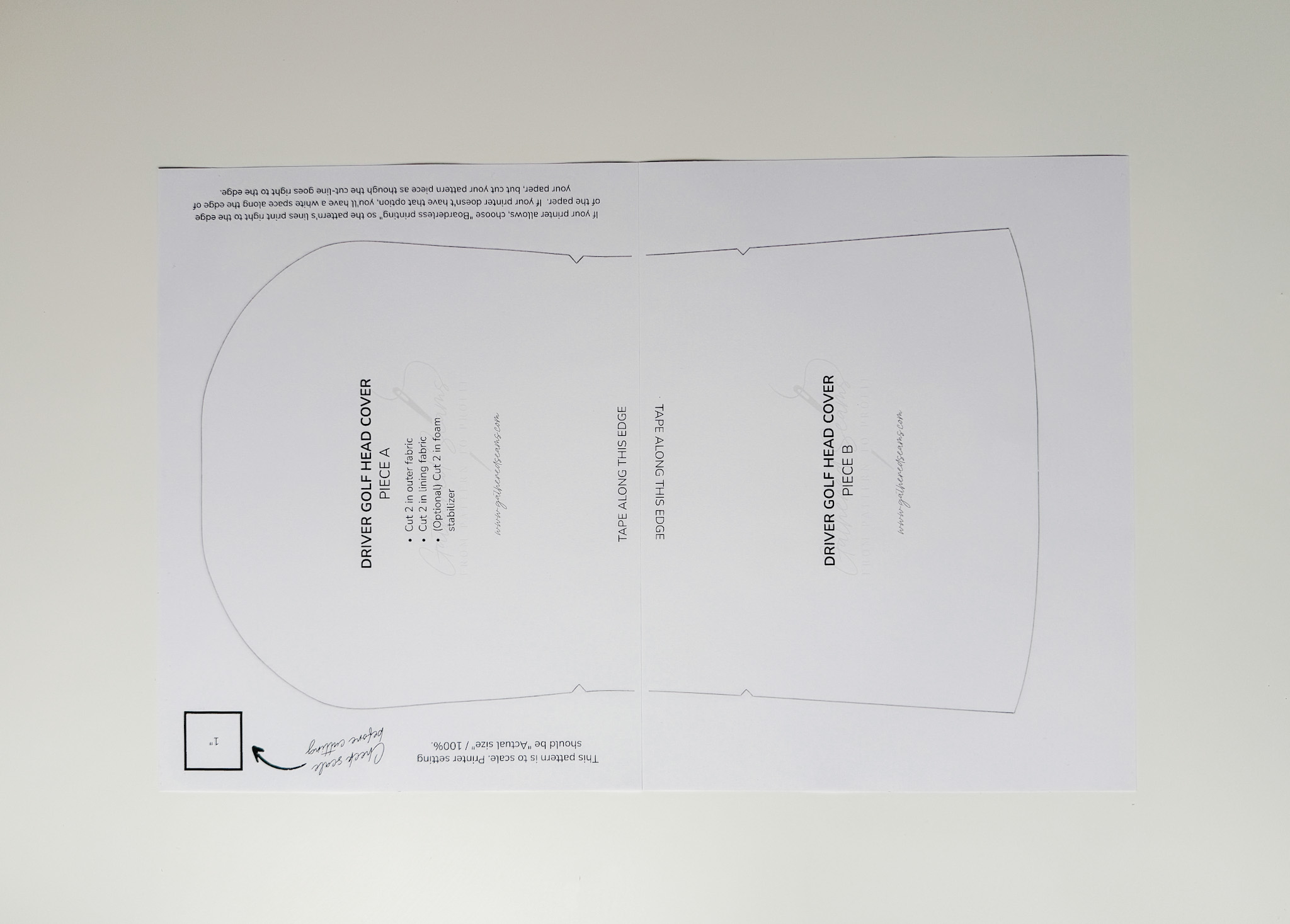
The 4 notches on either side of the pattern indicate where your elastics will start and end. You only need to cut or mark these notches on one of your outer pieces.
In your pattern piece, you will:
- Cut 2 in outer fabric
- Cut 2 in lining fabric
- (Optional) Cut 2 in foam stabilizer
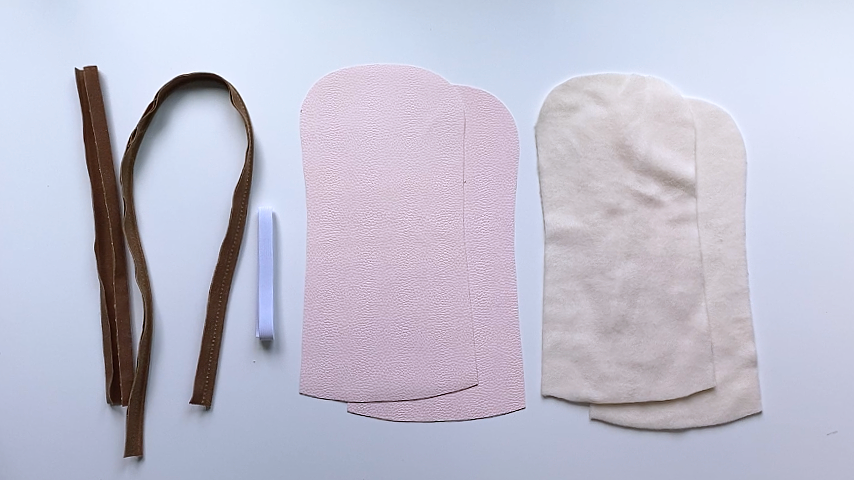
You will also need:
- 2 pieces of elastic
- 1/2″ double-fold binding
- Piping (here’s how I made my piping for this project)
*Length for each will vary depending on the size of cover you’re making (i.e. driver, wood, or hybrid) and is indicated on each pattern.
Optional
If you want to add any customization, letters, or numbers, do so now to the top outer piece. If you want to use golf club head cover number tags to label the cover, you can make a loop to thread through the tag, then sew the loop to the top of the outer pieces.
Step 2
For the outer bottom piece only: use a temporary fabric marker and ruler to draw two lines going from the notches on one side of the cover to the other. Mark these on the wrong side of the fabric.
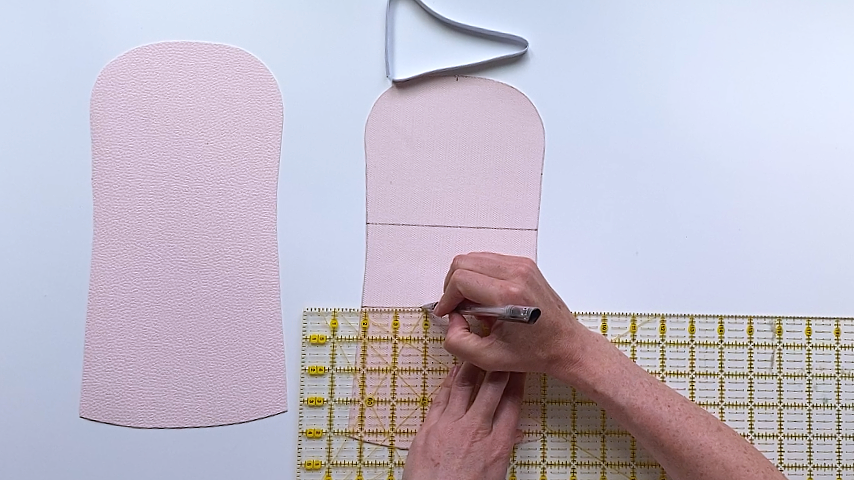
The elastics will be centred on these lines.
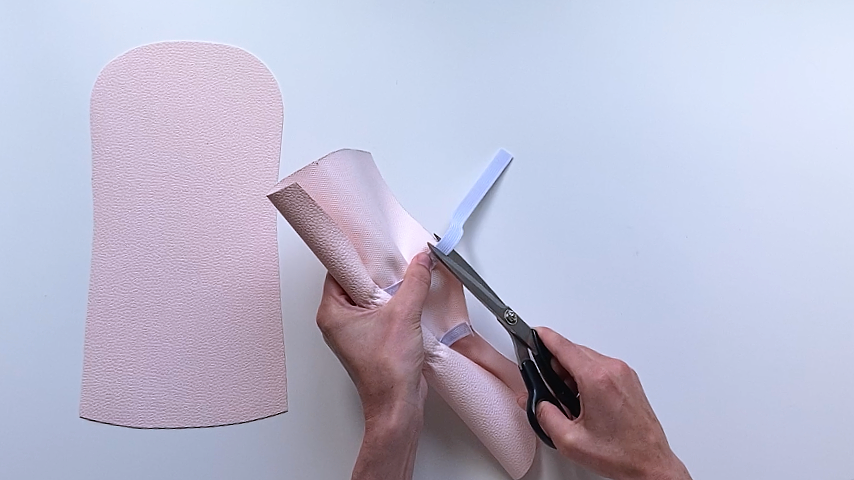
It’s easier to work with a long piece of elastic so you have enough to grab and stretch as you go. So to reduce waste, cut your elastic after sewing it on.
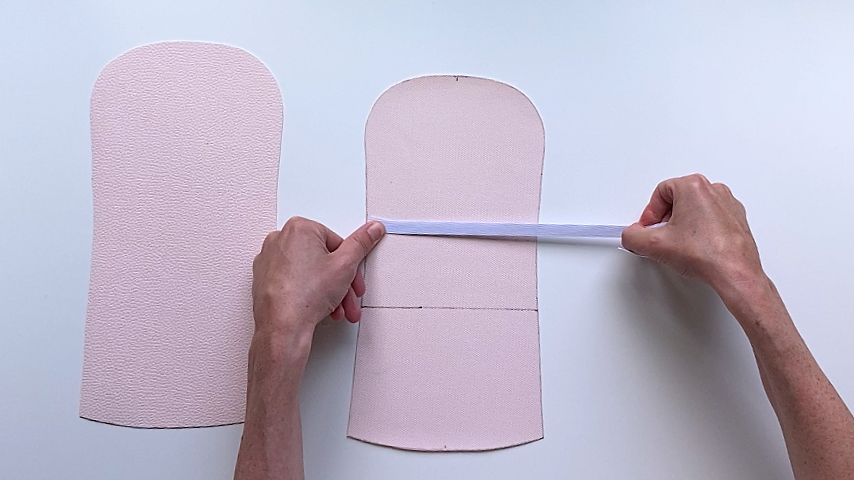
To sew the elastics on, use a zig-zag stitch and pull on the elastic as you sew.
You should not pull the fabric; simply pull the elastic. You can pull it almost as long as it will go.
A couple of tips:
- Test your zig-zag stitch on a scrap piece of fabric to ensure it is the right width for your elastic and the length you desire. Each sewing machine’s settings are different, but I am using a 1/2″ wide elastic and set my stitches to 6mm wide and 4mm long.
- Shorten your zig-zag stitch at the beginning and end to secure the start and end of your stitching in the seam allowance.
Check as you go that your elastic is centred on the line.
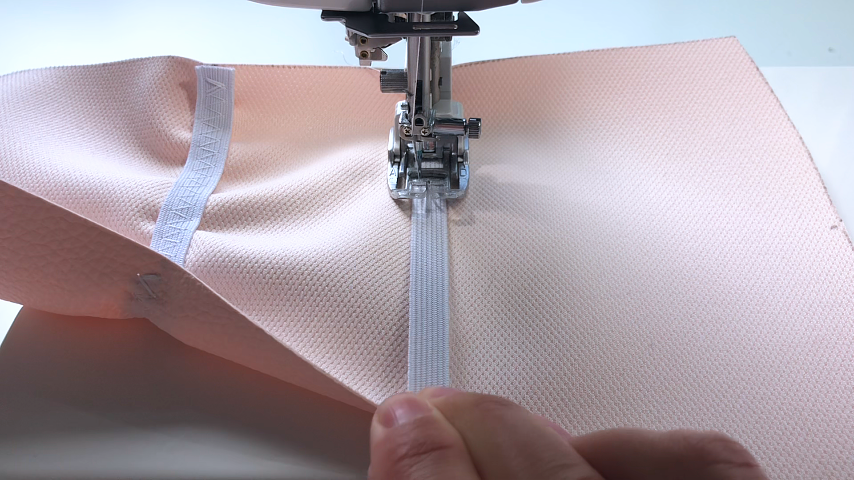
Cut the excess elastic off.
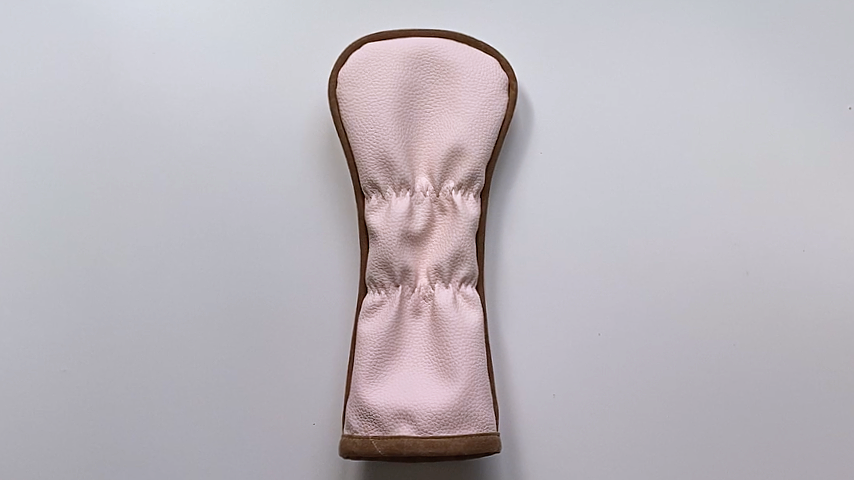
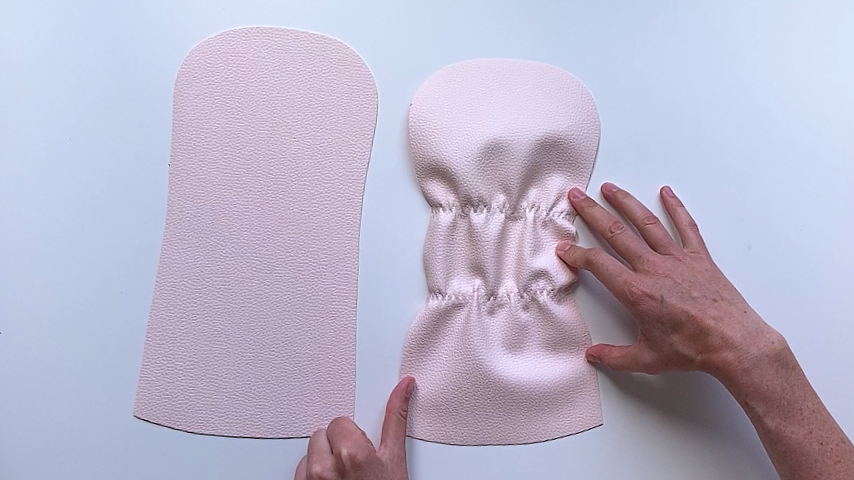
This is what your outer bottom piece will look like now:
Step 3
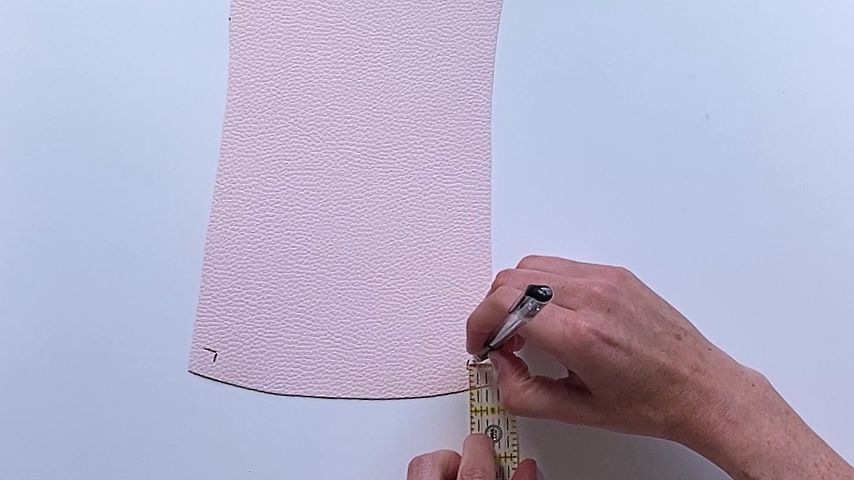
Use a temporary fabric marker to mark your side and bottom seam allowance on the right side of your top piece.
Where these two lines meet is where we want our piping to taper off.
Clip your piping around the outside edge of the top piece.
When you get to a curve, make small cuts in the seam allowance of the piping so you can curve it around. Be sure not to cut into the stitching.
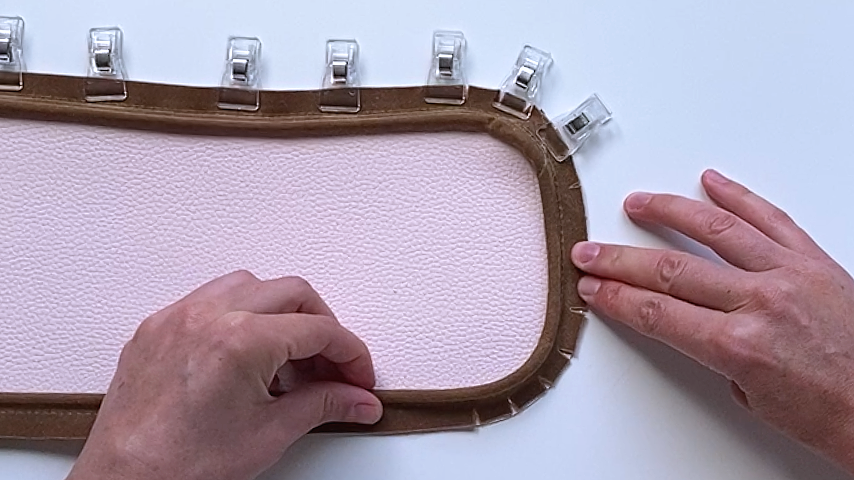
Taper your piping so the edge of it runs through where the two lines meet.
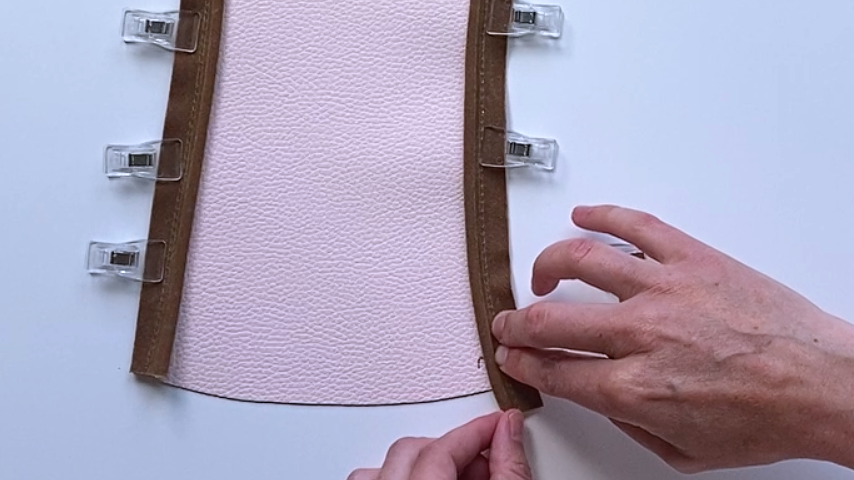
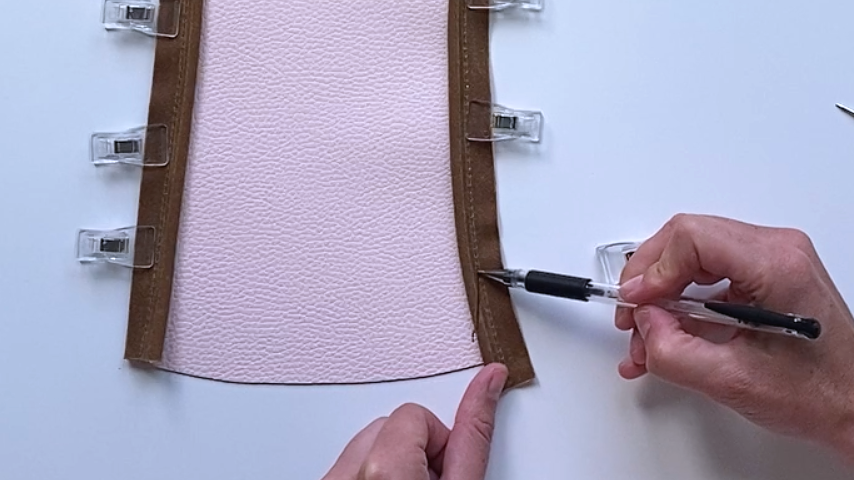
You can use a temporary fabric marker to mark your stitch line on your piping so you know where your stitching will meet your cord:
Use a seam ripper to open your piping to that point:
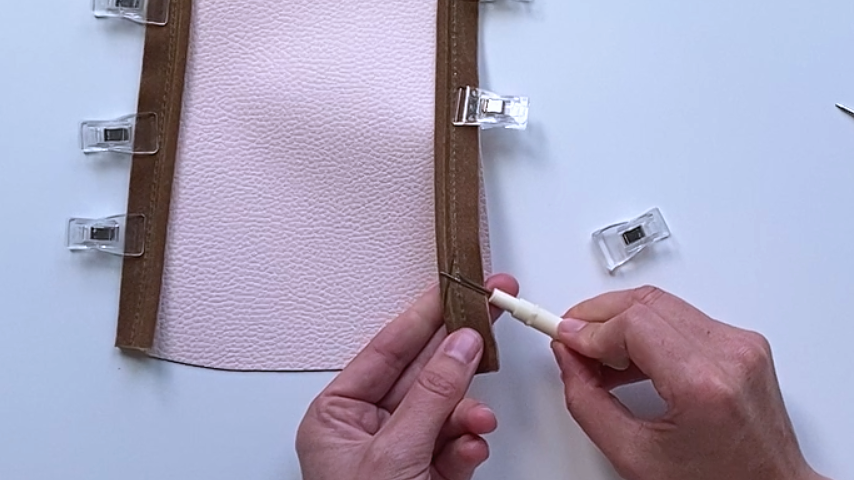
Then cut the cord only at that point. This will reduce the bulk in that seam and ensure you don’t have to sew over the cord.
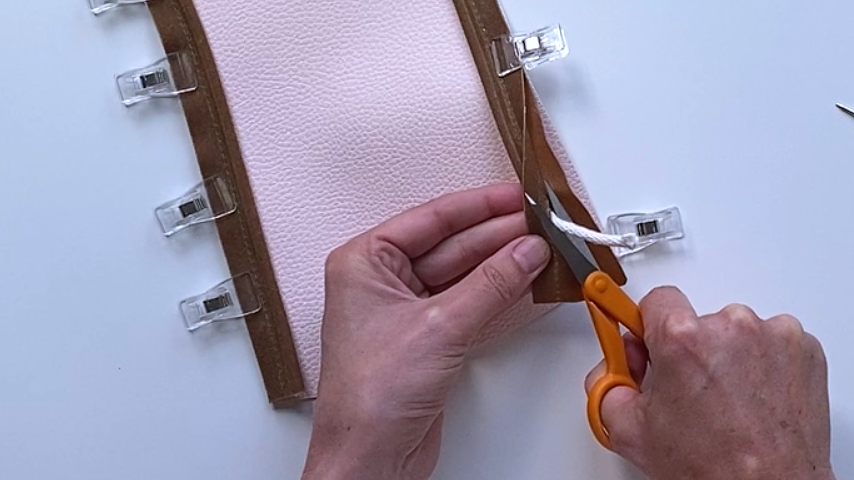
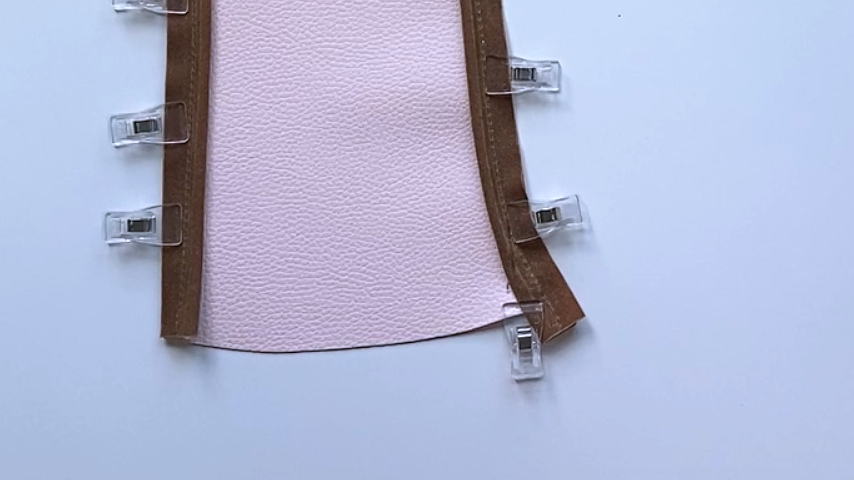
Repeat for the other side.
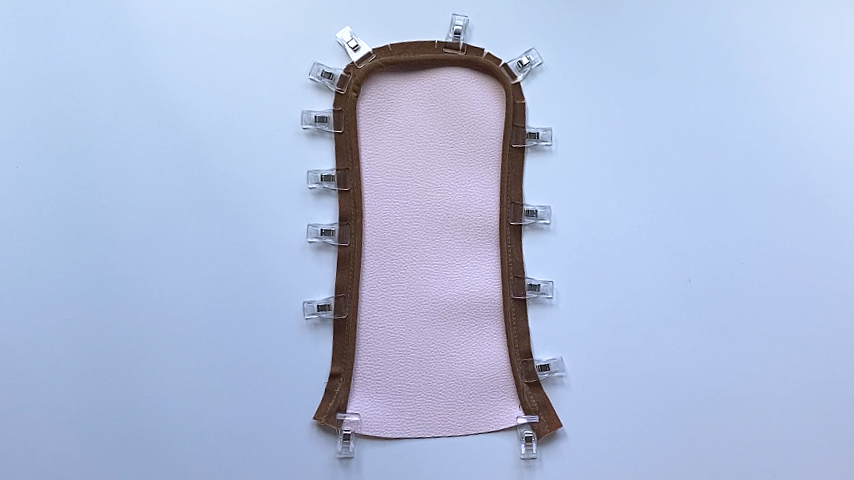
Use a zipper foot or a piping foot to baste your piping to the top piece, making sure the raw edges of the piping line up with the raw edge of the top piece (except for at the start and end where the piping tapers off).
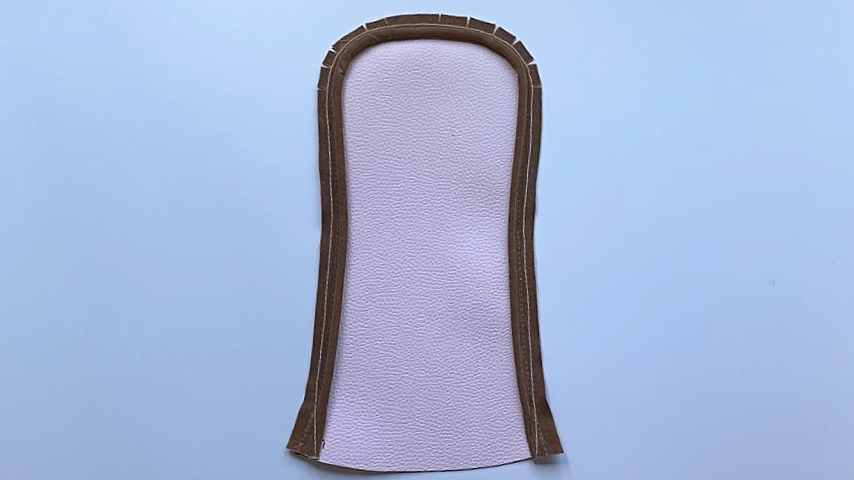
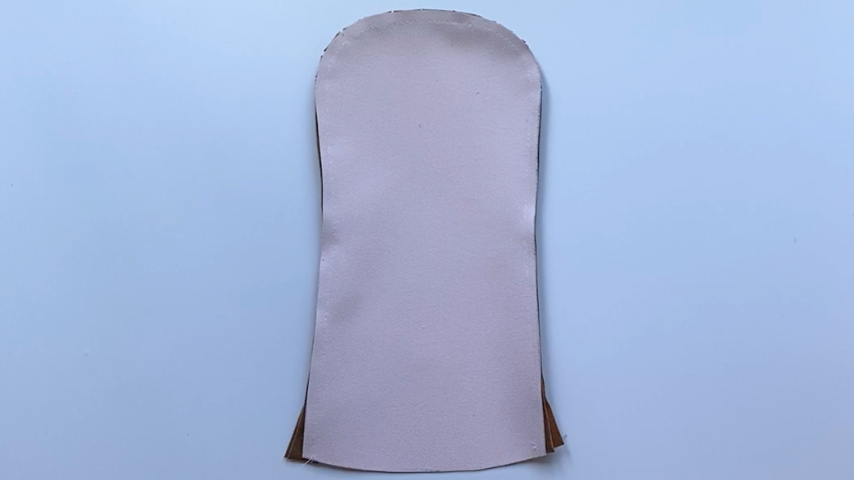
Trim the start and end of the piping so that it is in line with the edge of your fabric.
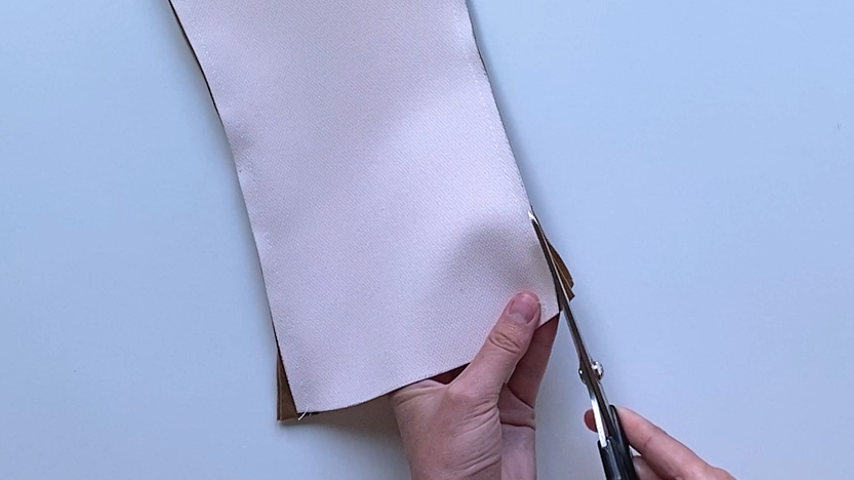
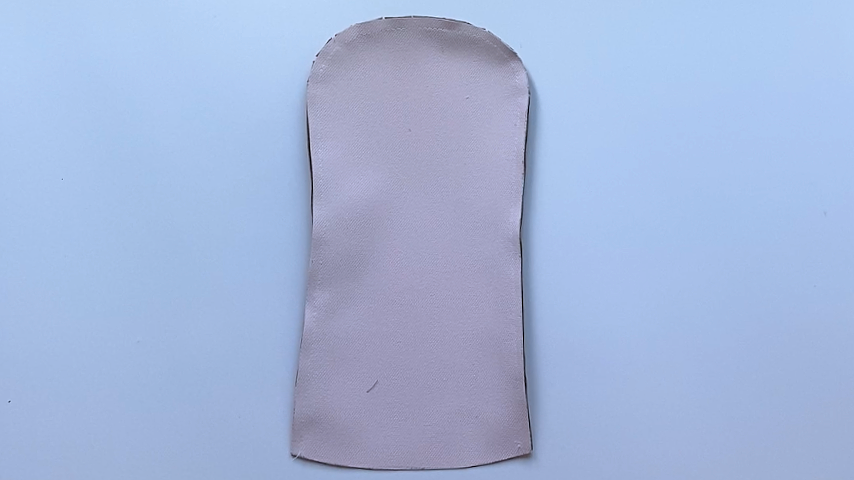
Step 4
Place your outer bottom piece and outer top piece right sides together and clip around the edges.
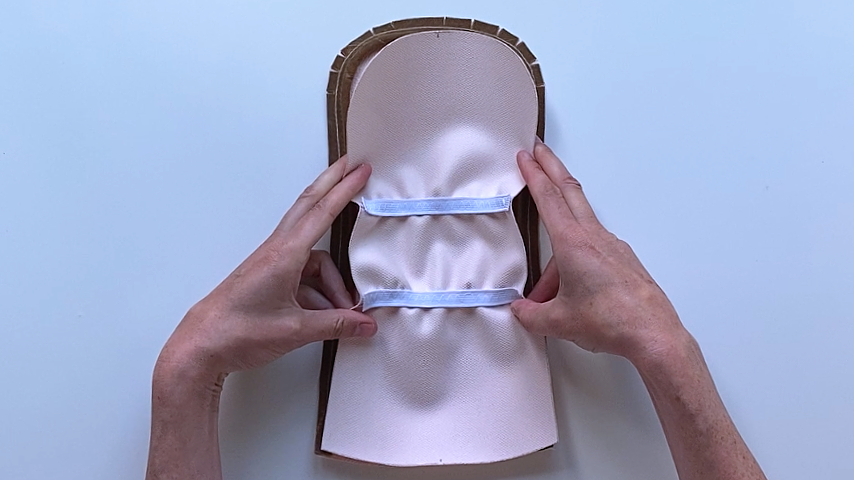
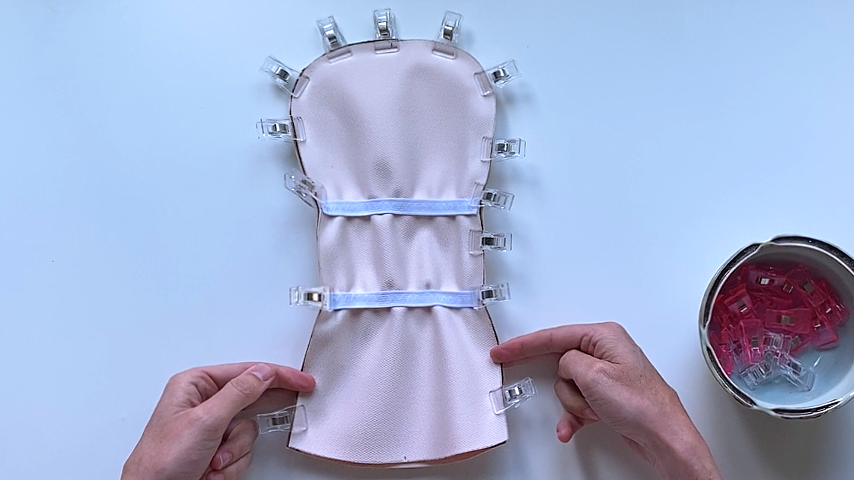
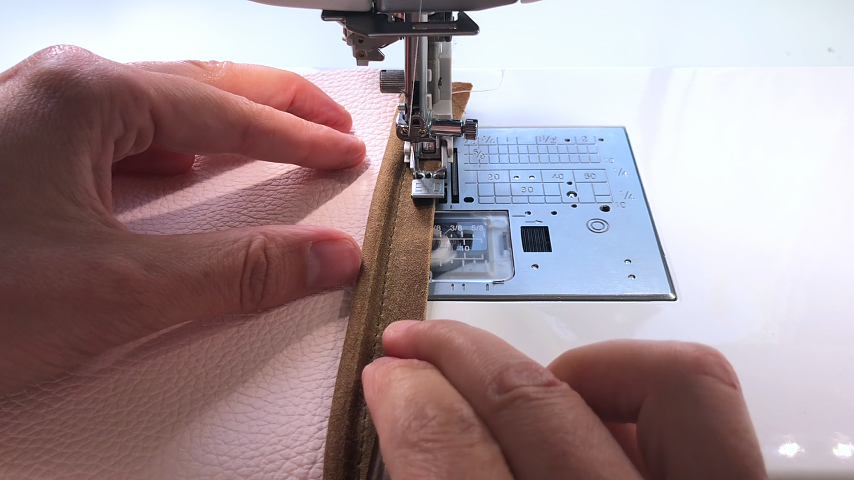
Using a zipper foot/piping foot and 1/2″ seam allowance, sew around the sides and top of the cover.
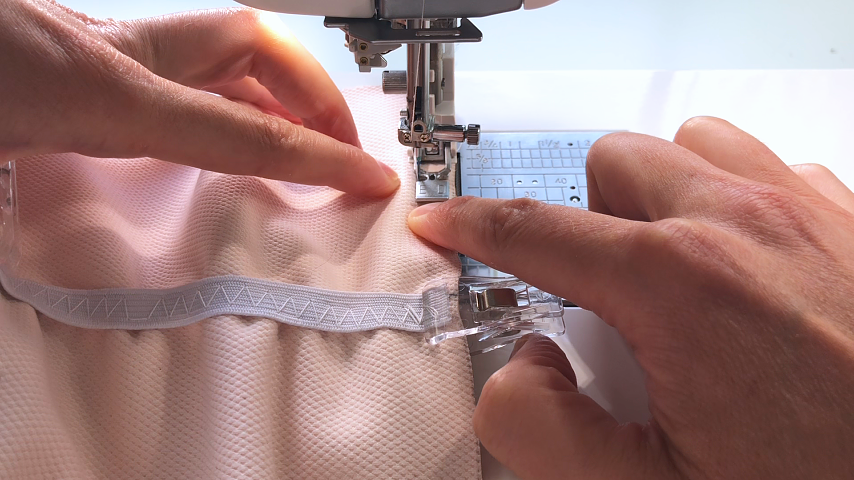
I like to use my left hand to push the cord/piping into the presser foot and my right hand to flatten the fabric next to the cord. This helps get the stitching nice and close to the cord when using a zipper foot.
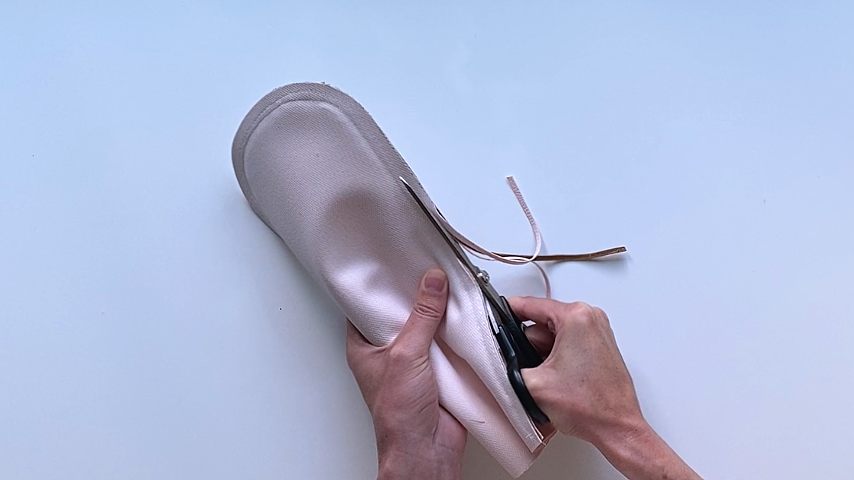
Trim your seam allowance, but leave a little more seam allowance at the bottom edges and top. This will make it easier to open the side seams when sewing the lining in. And we’ll baste the lining to the seam allowance along the top to ensure it doesn’t pull out when taking the cover off.
Step 5
Place your lining right sides together and sew the sides together using a 5/8″ seam allowance. Using a bigger seam allowance will help ensure the lining fits inside the cover, without extra bulk.
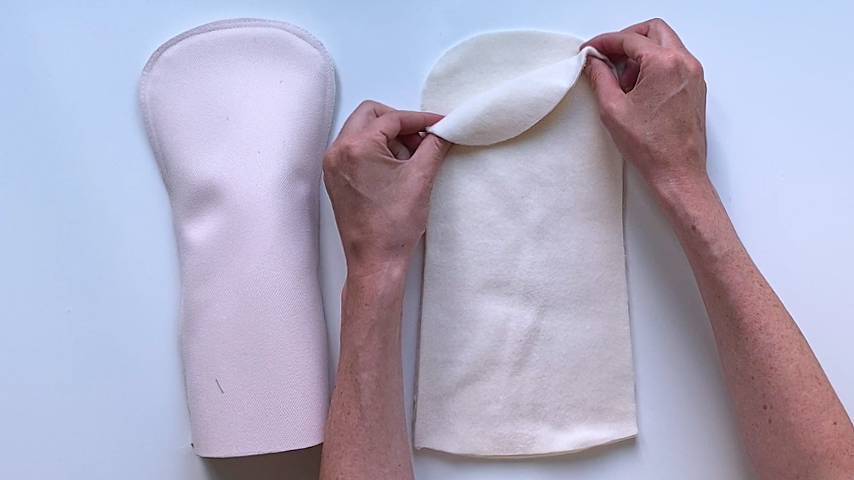
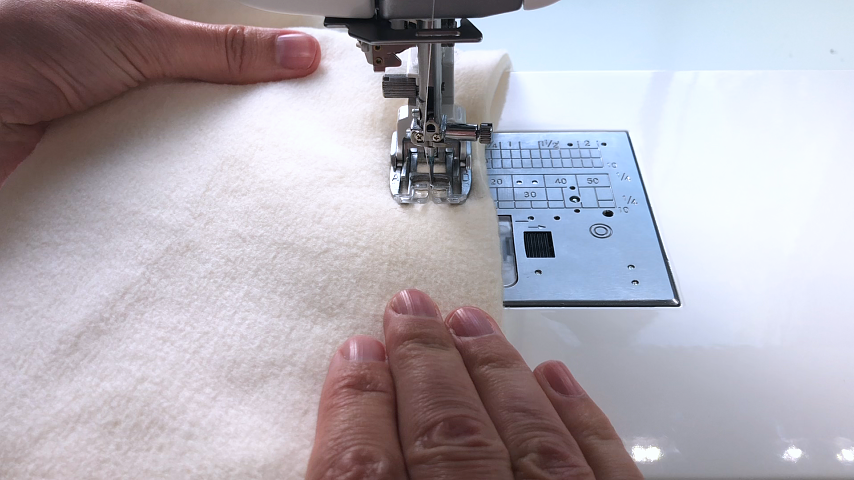
Trim your seam allowance, again, leaving it a little wider at the bottom edges and along the top.
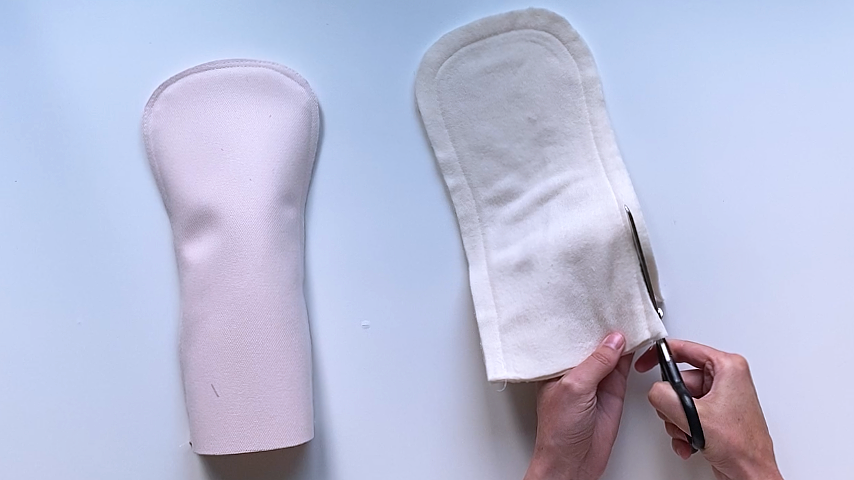
Step 6
With both your lining and outer cover wrong sides out, line up the sides, top, and bottom and then sew in the seam allowance along the top to secure the lining to the outer cover.
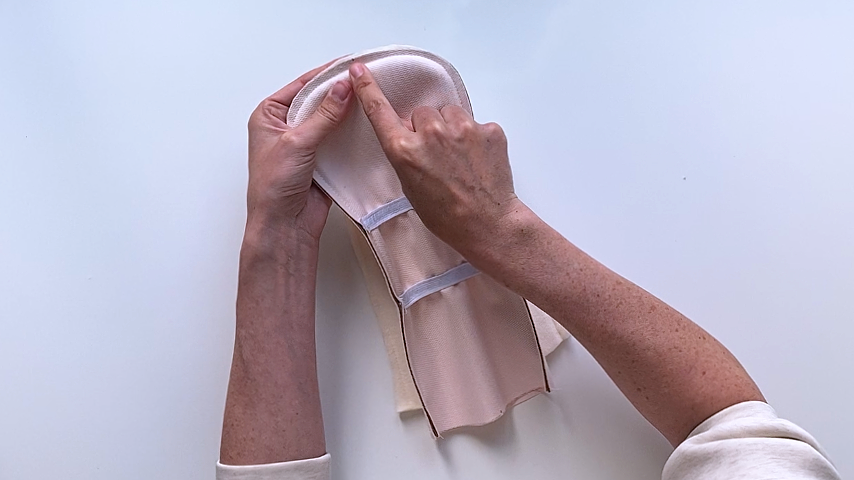
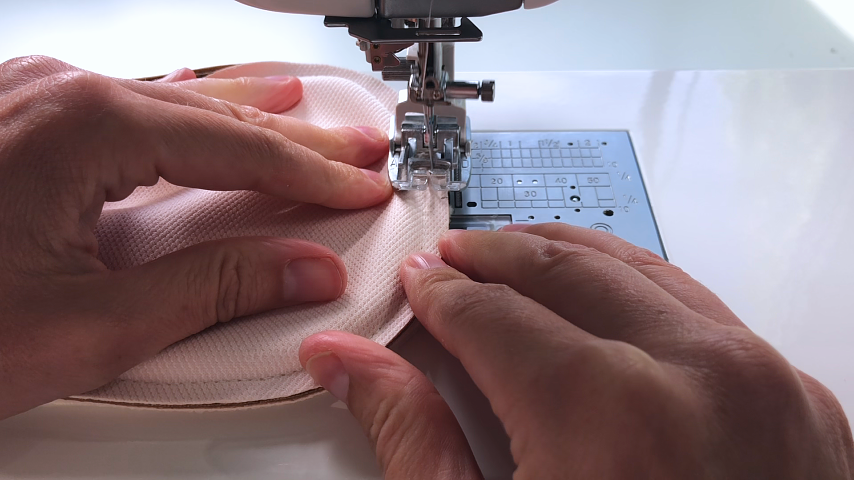
Turn the outer cover right side out and push the lining inside, smoothing it out and matching up the side seams.
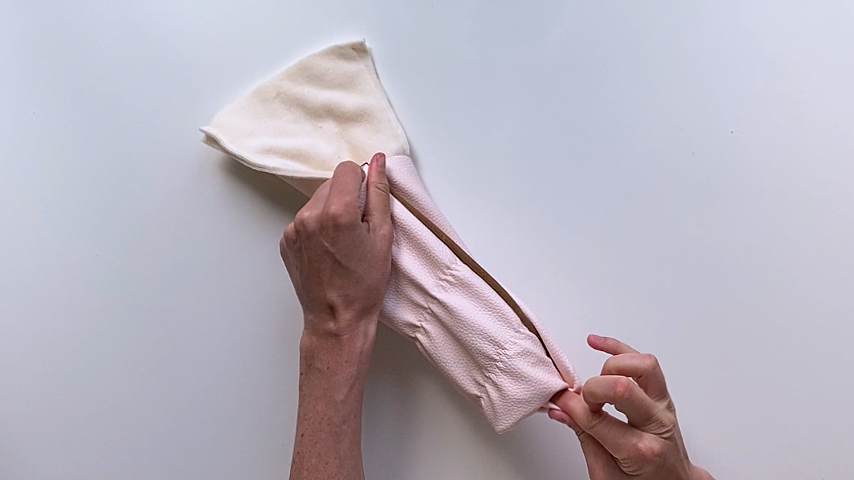
Open the side seams on both the lining and outer cover, line them up and clip into place. Clip around the bottom edge.
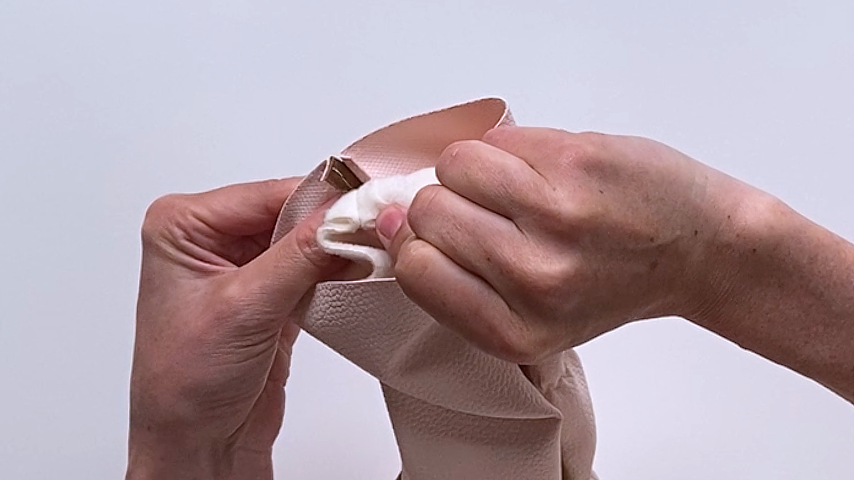
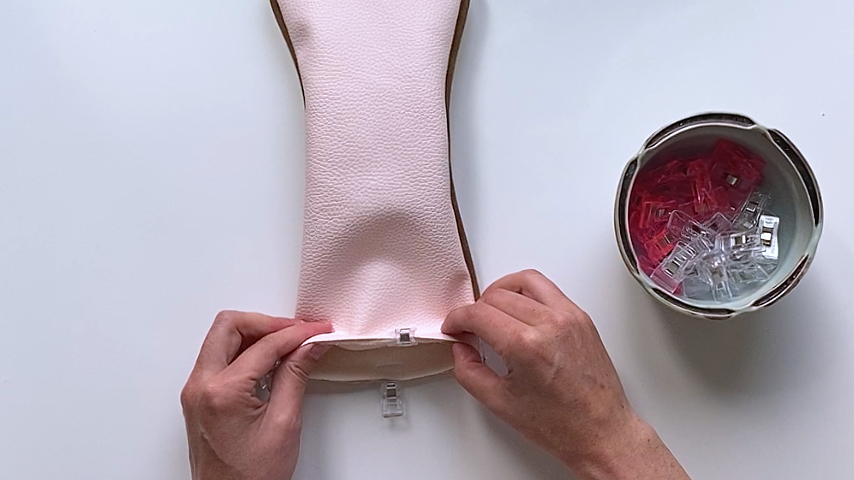
Baste the lining and cover together around the bottom opening.
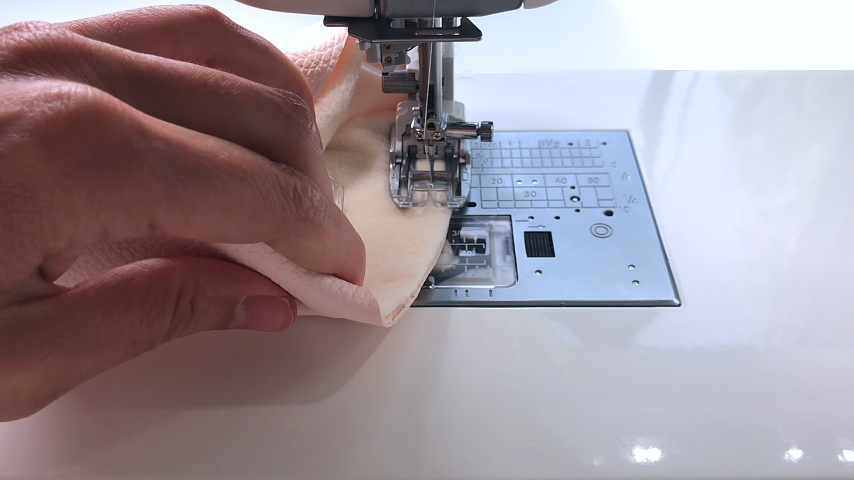
Step 7
To finish the golf head cover, you can sew the binding on around the bottom edge.
Use whichever techniques you prefer to join the ends and sew it on. I’m sharing my favourite techniques below.
Mark about 2″ in from one end of your binding; this is where you’ll start sewing it to the cover.
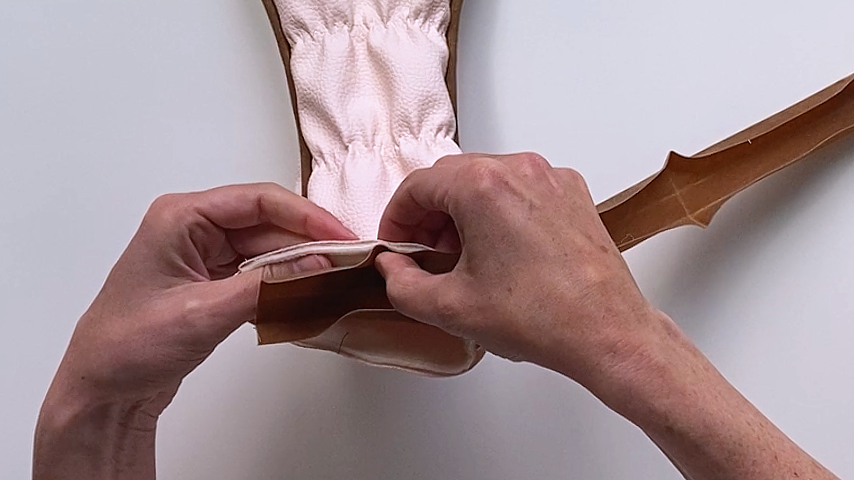
Sew in the first crease and backstitch at the start and end. I sew the binding to the inside of the cover first.
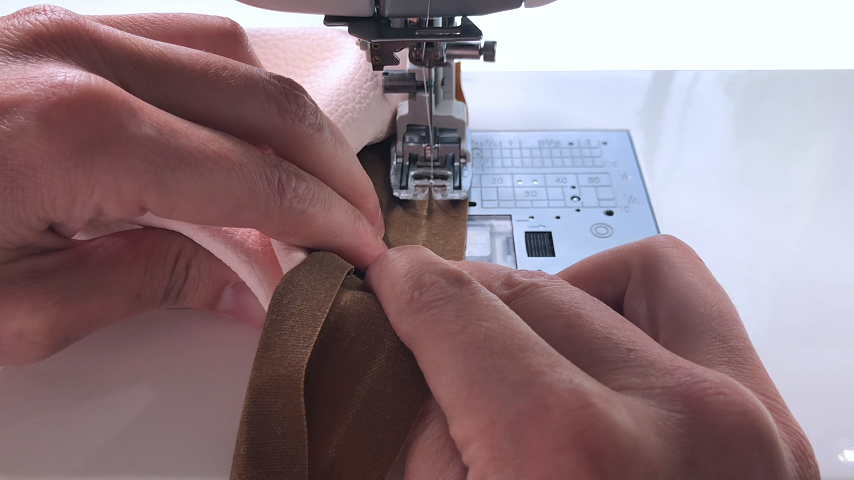
When I come back around to the start of the binding, I fold the loose 2″ of it back, place the end directly over top, then sew right up to the fold.
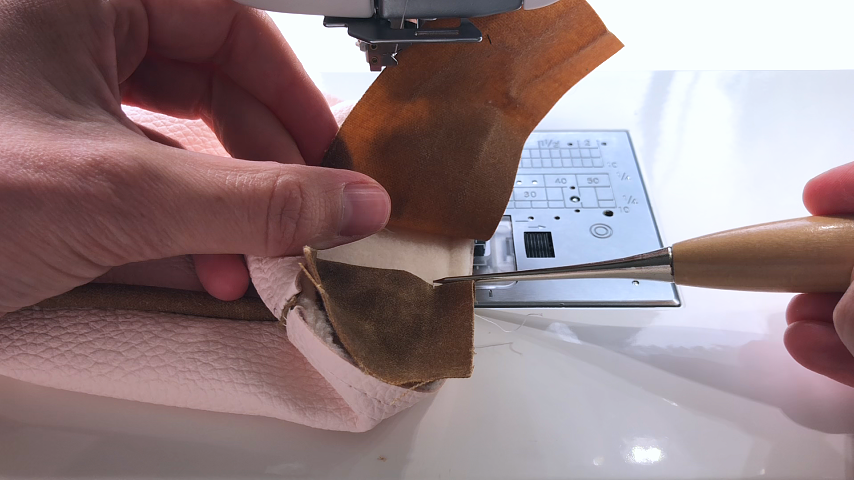
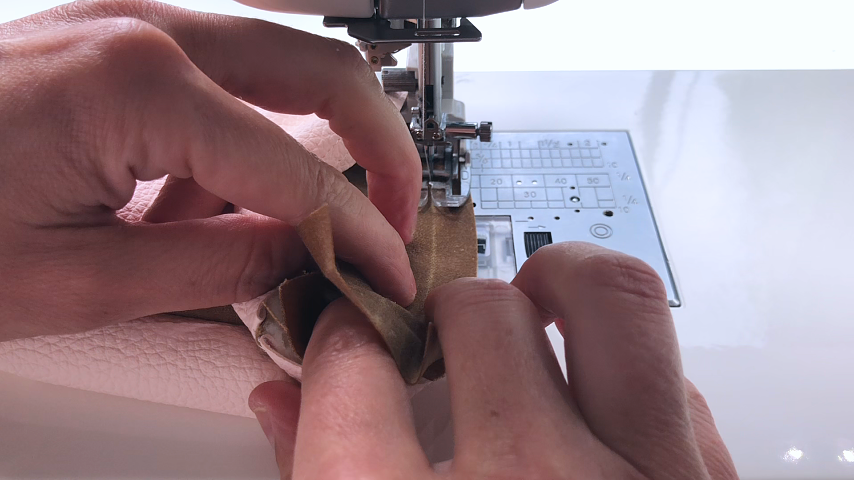
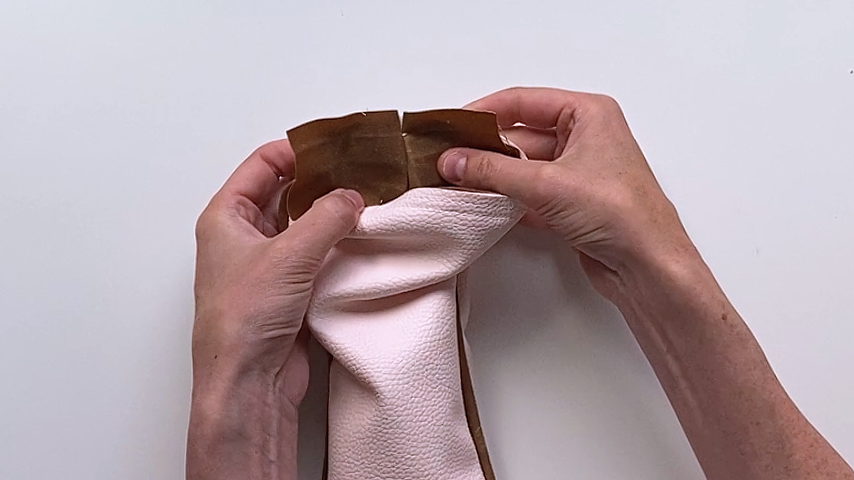
Unfold the end of the binding and fold the cover so you can place the start of the binding at a 90-degree angle to it.
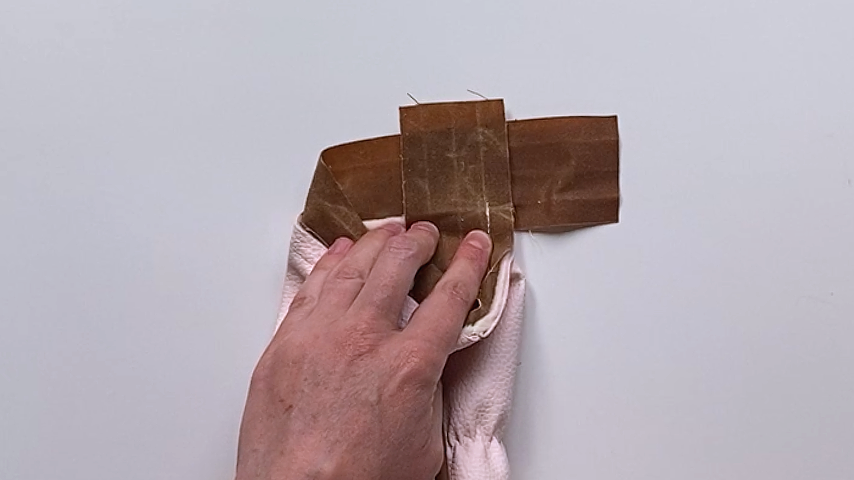
You’ll sew diagonally to join the two ends, starting at where the two pieces intersect and ending at the line of stitching.
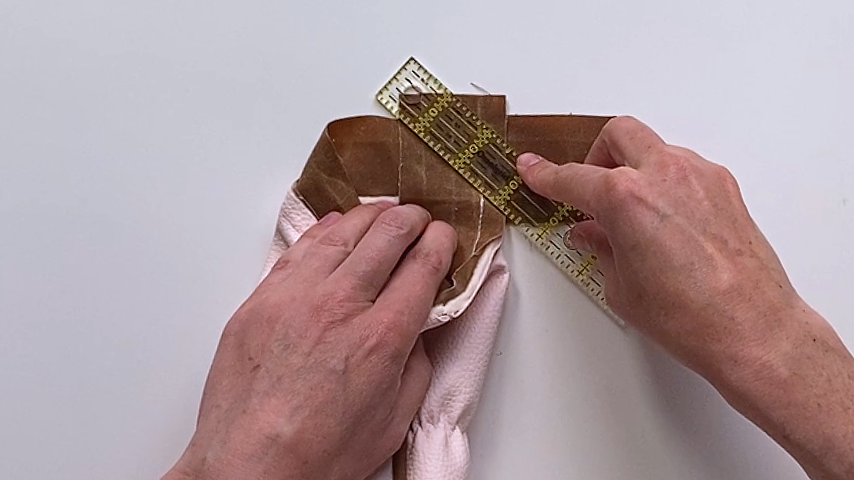
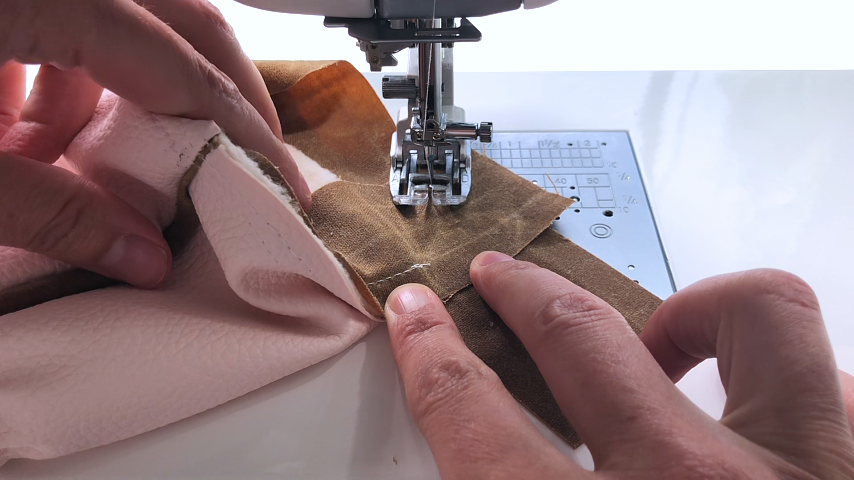
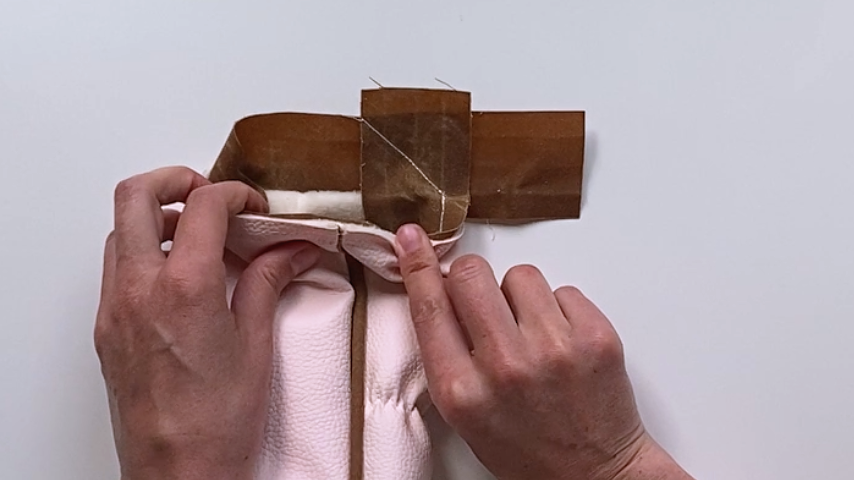
Check that the seam looks good then cut the excess binding and press the seam open.
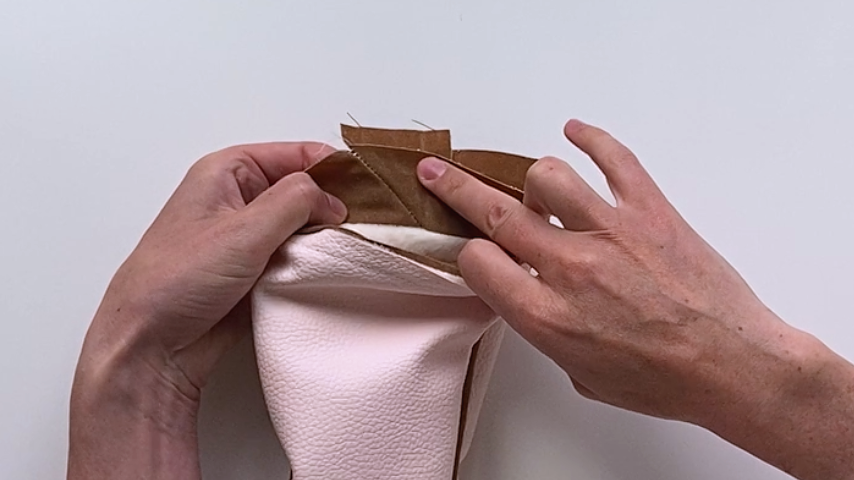
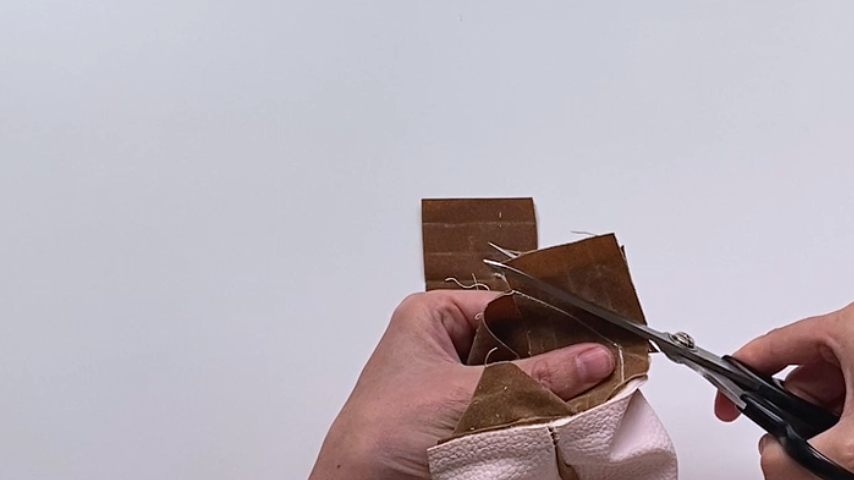
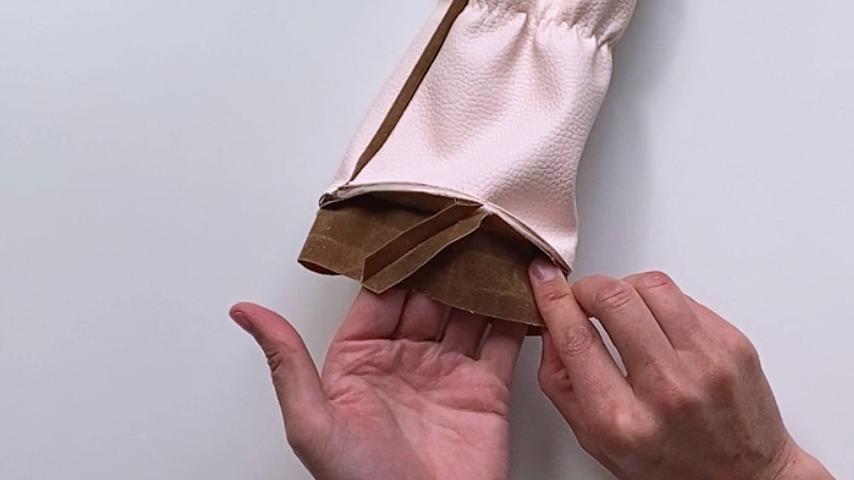
Fold the binding to the outside of the cover. You can clip into place if you like, but I find the clips get in the way when sewing around this smaller opening.
Make sure the folded edge of the binding covers the line of stitching and keep checking as you sew to ensure it’s evenly covering it.
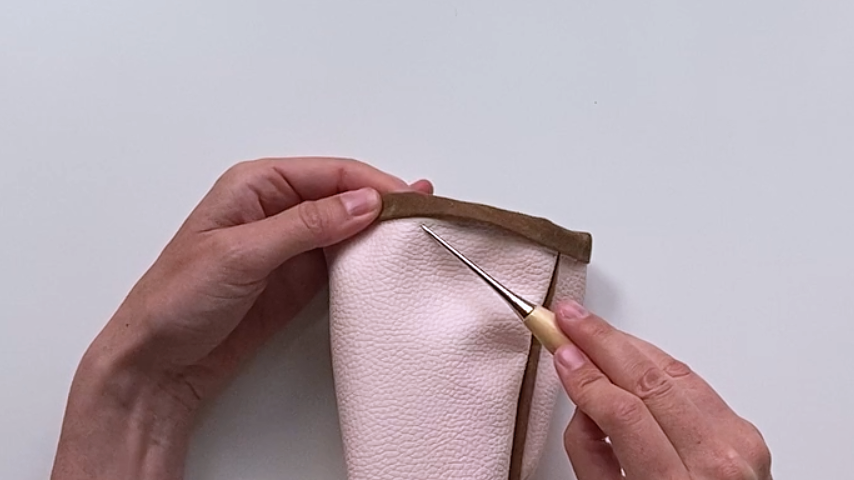
Then I topstitch (from the outside of the cover) about 1/8″ in from the inside edge of the binding.
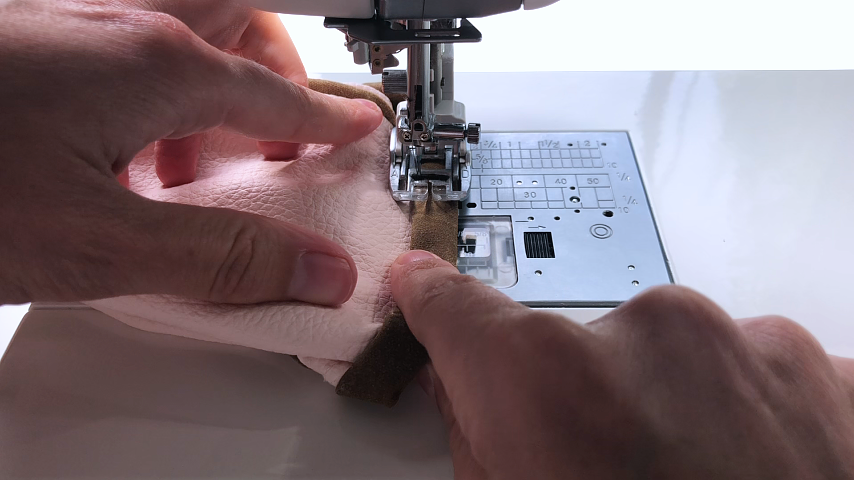
Your golf head cover is complete!