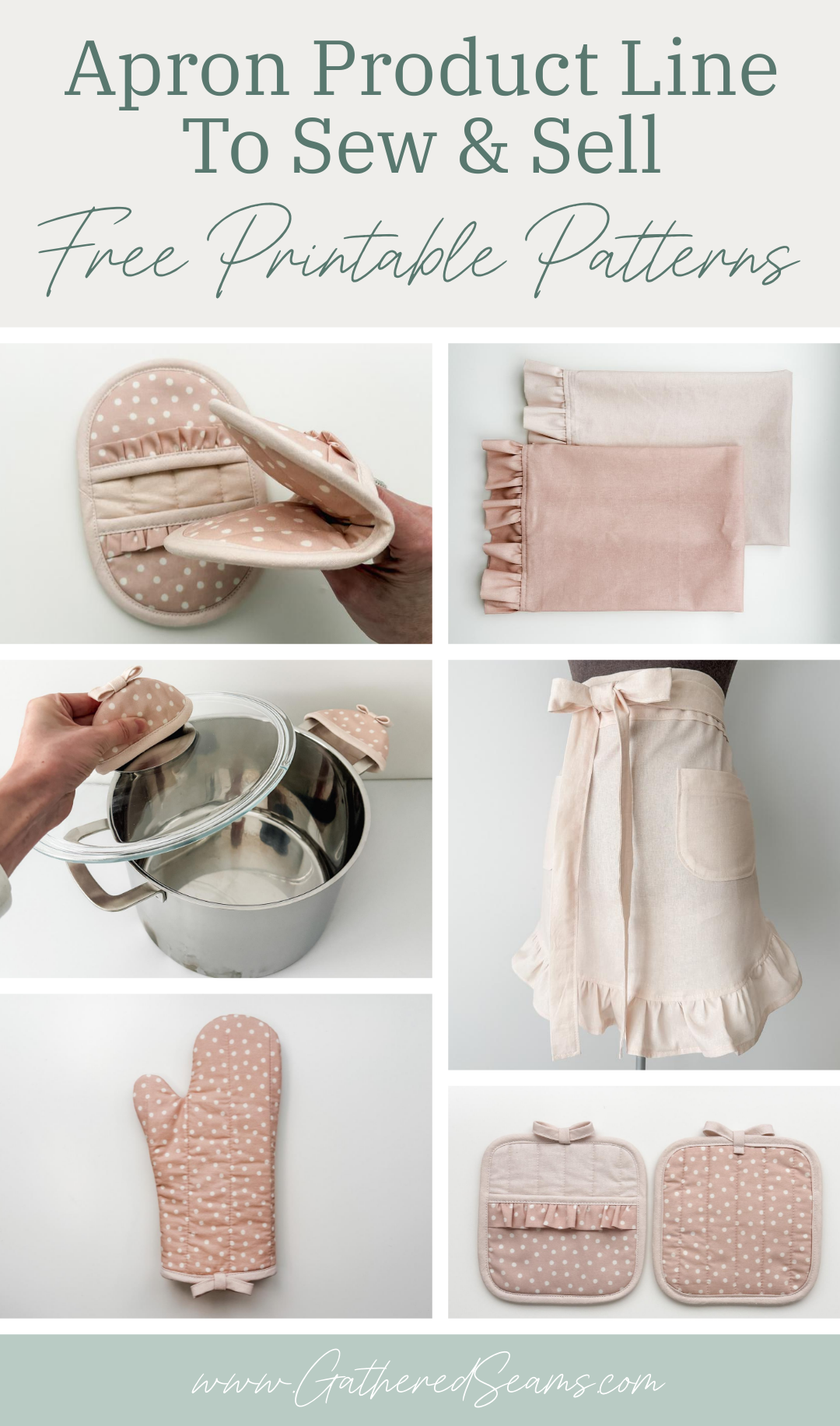
Apron Product Line to Sew & Sell | Free Patterns
This article is going to explain how I would build a product line around aprons, and the types of products I would add to round out my business.
When starting a business, it’s important to think about how you can increase your units per transaction (UPT) and revenue per transaction, as well as how you’ll get repeat customers.
If I only sell aprons, my customers will likely only buy one item per transaction (because most people only need one apron), and they won’t come back to purchase as frequently since aprons don’t need replacing very often.
There are ways to encourage multi-item sales and repeat customers with a 1-item product line. For example, I may target consumers who buy in bulk, such as restaurant owners or brides and grooms buying wedding party gifts.
Making aprons that target restaurant owners would also encourage repeat customers, as restaurant aprons need to be replaced more frequently and as new staff are hired.
Another way to encourage repeat customers (if I wasn’t targeting restaurant owners) would be to create seasonal aprons so my customers feel like they want to update their apron for seasons or major holidays (e.g. Christmas, Easter, Halloween, etc.)
However, in most scenarios, it’s a good idea to round out your product line and have other items your customers can add to their order or come back to buy at a later date.
1 – Core Product
Aprons will be your core product; the main product in your line that you’ll sell the most of and is at the mid to high range of your price points.
It’s important to think about your target market and the main style and aesthetic they’ll be attracted to. Then stick to that style, and even a color scheme for all your products. For example, cottagecore aesthetic in pastel colours.
A common mistake handmade business owners make is to sew aprons in a wide variety of styles and in every color and print, in an effort to make more sales. However, this can have the opposite effect.
Too many options tend to cause decision fatigue, and shoppers end up walking away without buying.
Sticking to a color scheme and style will also make it easier to build a cohesive product line.
So in this step, decide on:
- your target market (e.g. bakers, BBQ-ers, parents (who bake with their kids and need sets), etc.)
- the style of aprons you’ll offer (e.g. feminine/romantic, masculine, vintage, retro, etc.)
- color scheme you’ll stick to (e.g. pastels, neons, earth tones, etc.)
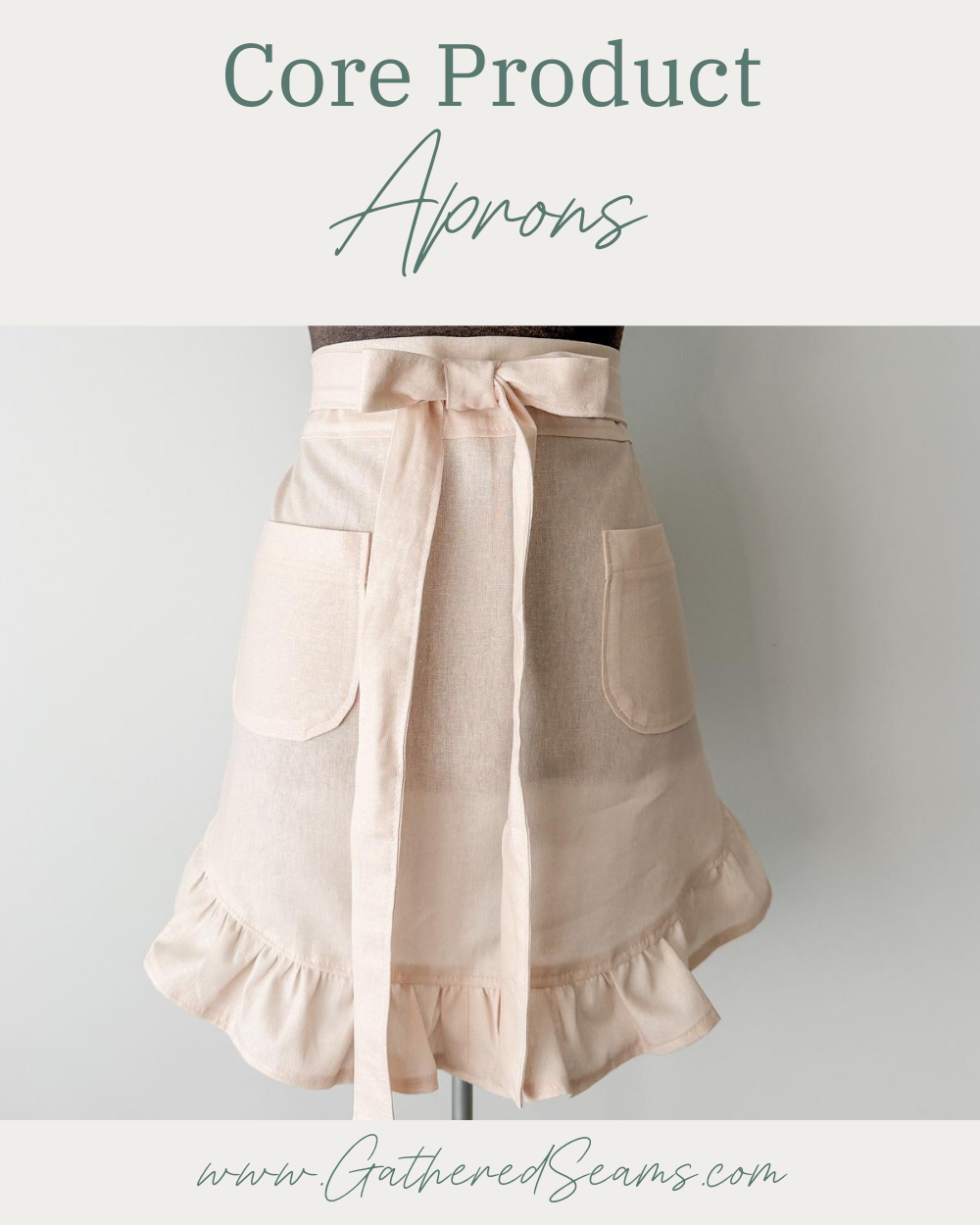
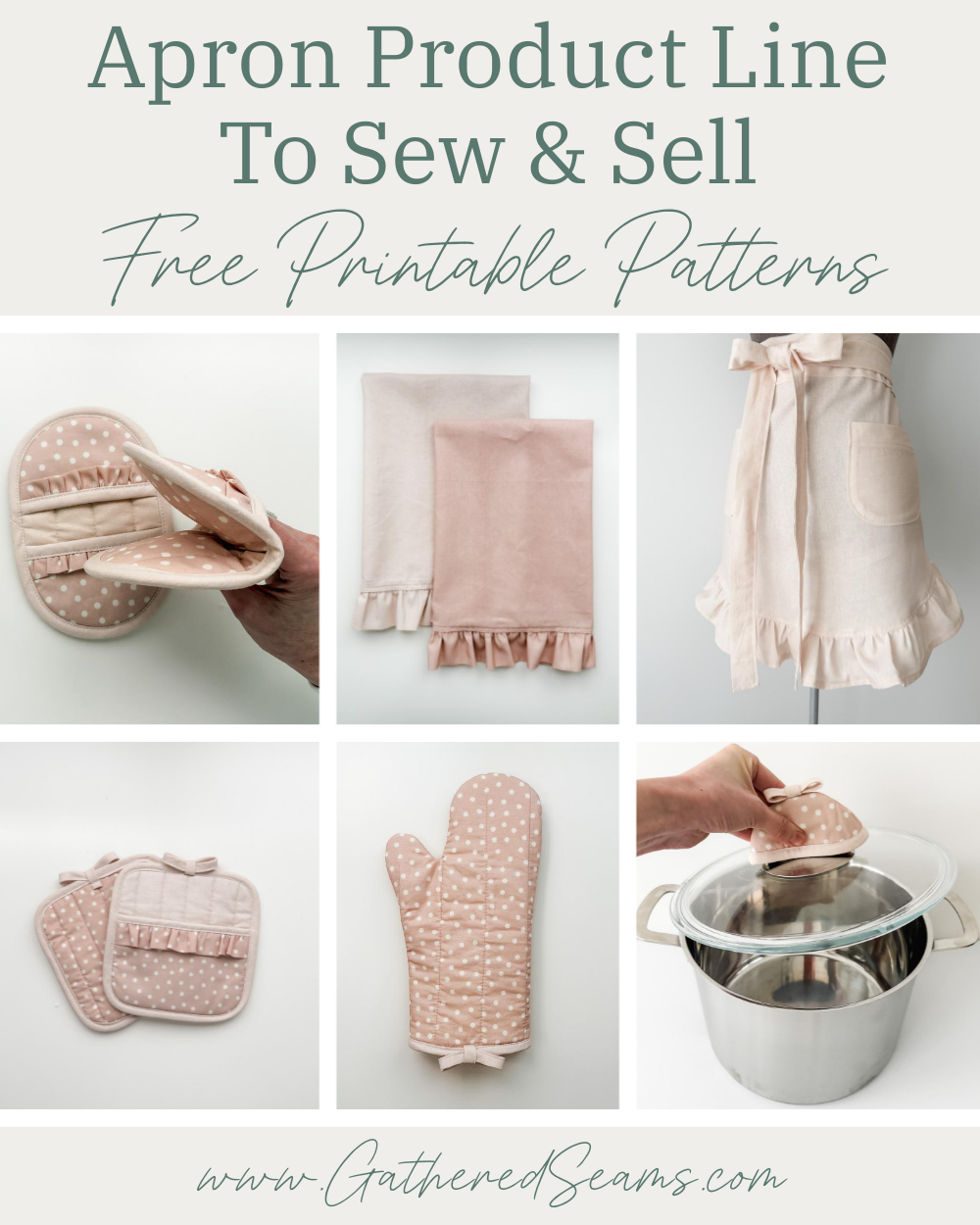
>> Here is the free printable pattern for the above apron: How To Sew a Ruffled Half Apron | Free Printable Pattern
2 – Add-on Products
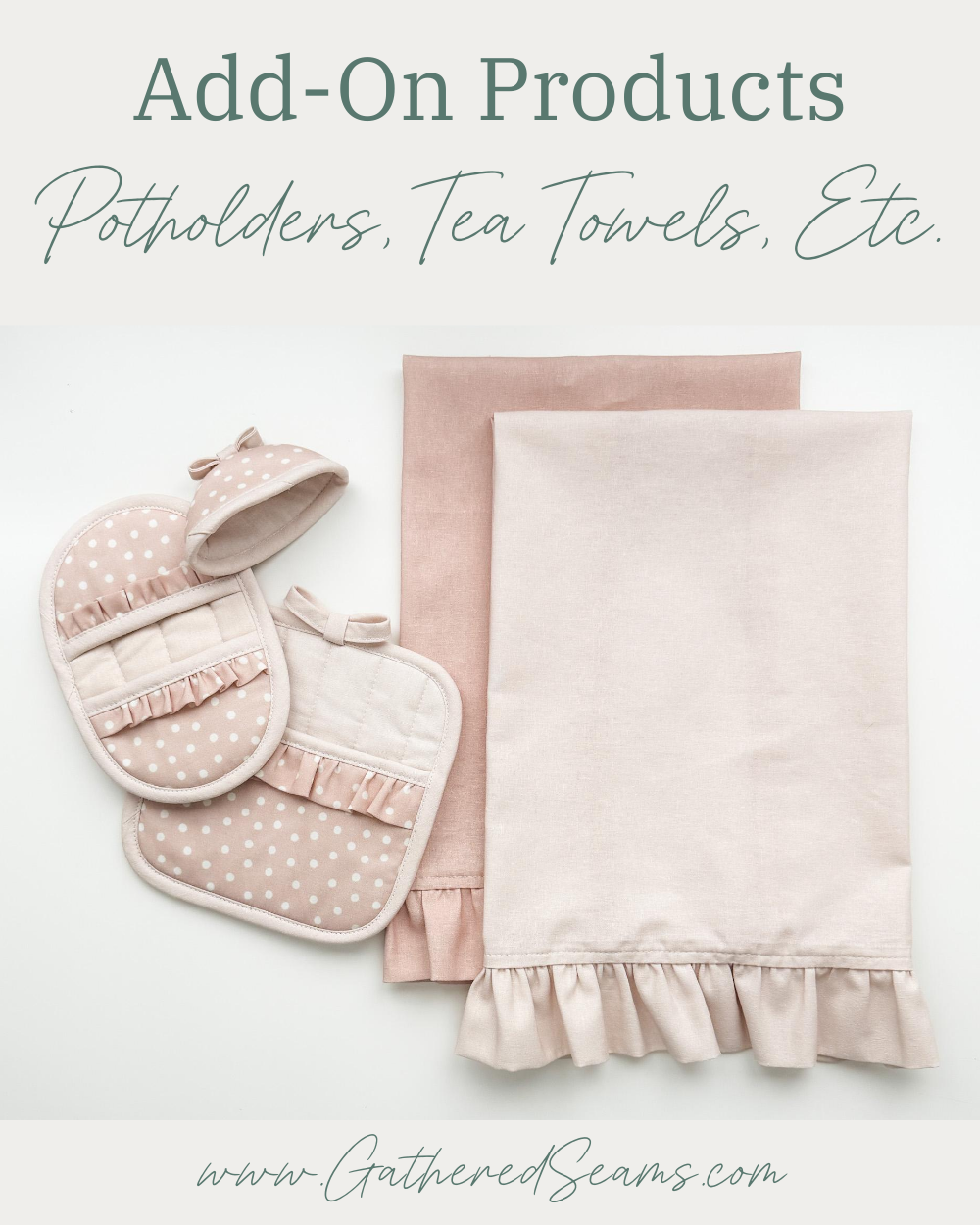
These are products customers will add to their order when buying an apron and should be priced lower than your aprons.
They should be products that the customer can use with the apron, or that would be beneficial when cooking/baking.
Good add-on products to an apron are:
- Oven mitts
- Potholders
- Pot pinchers
- Pot lid holders
- Tea towels
- Hot pads
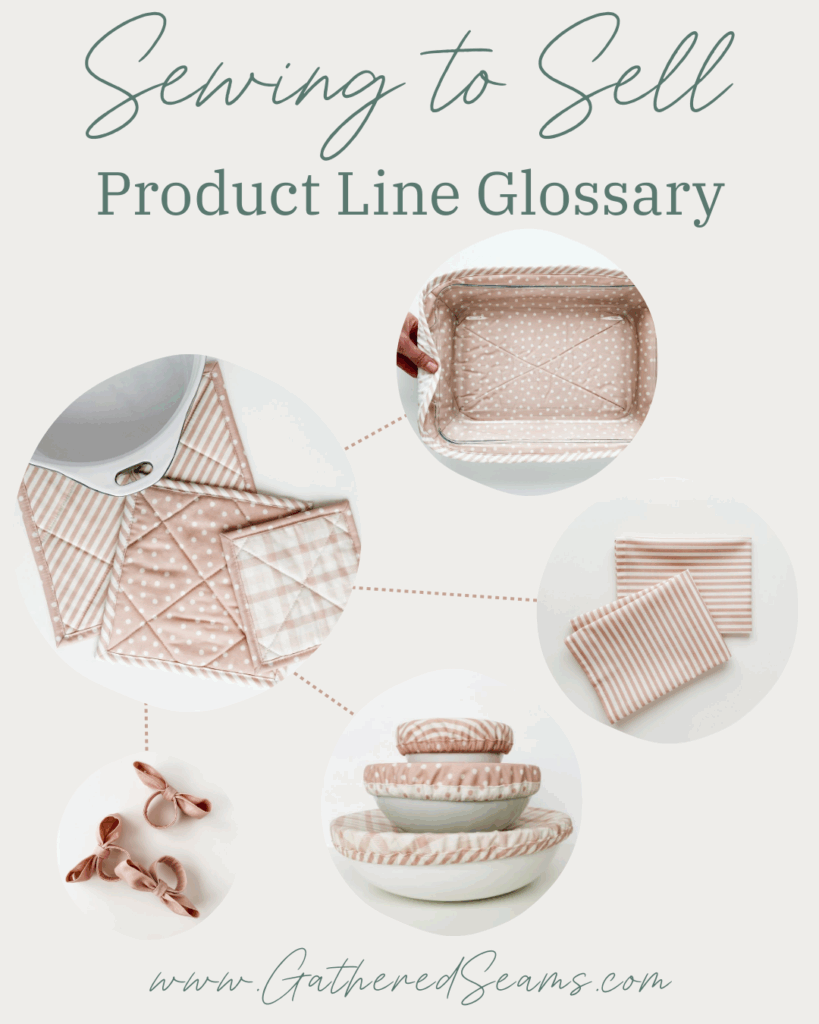
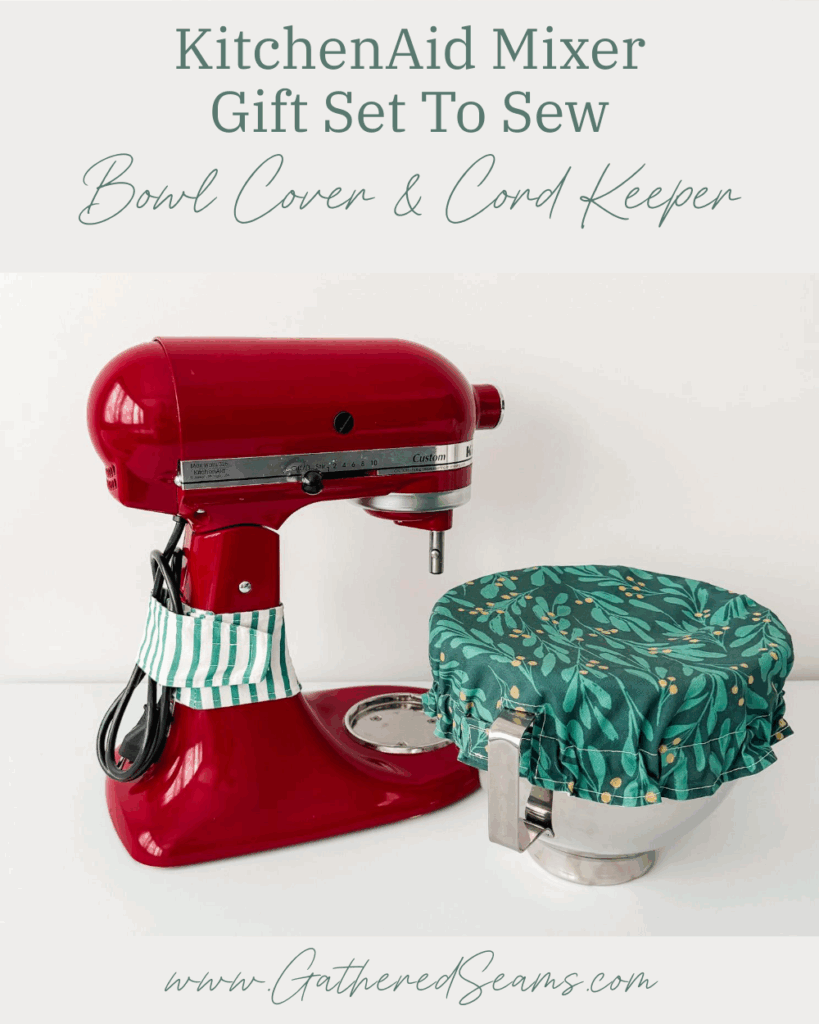
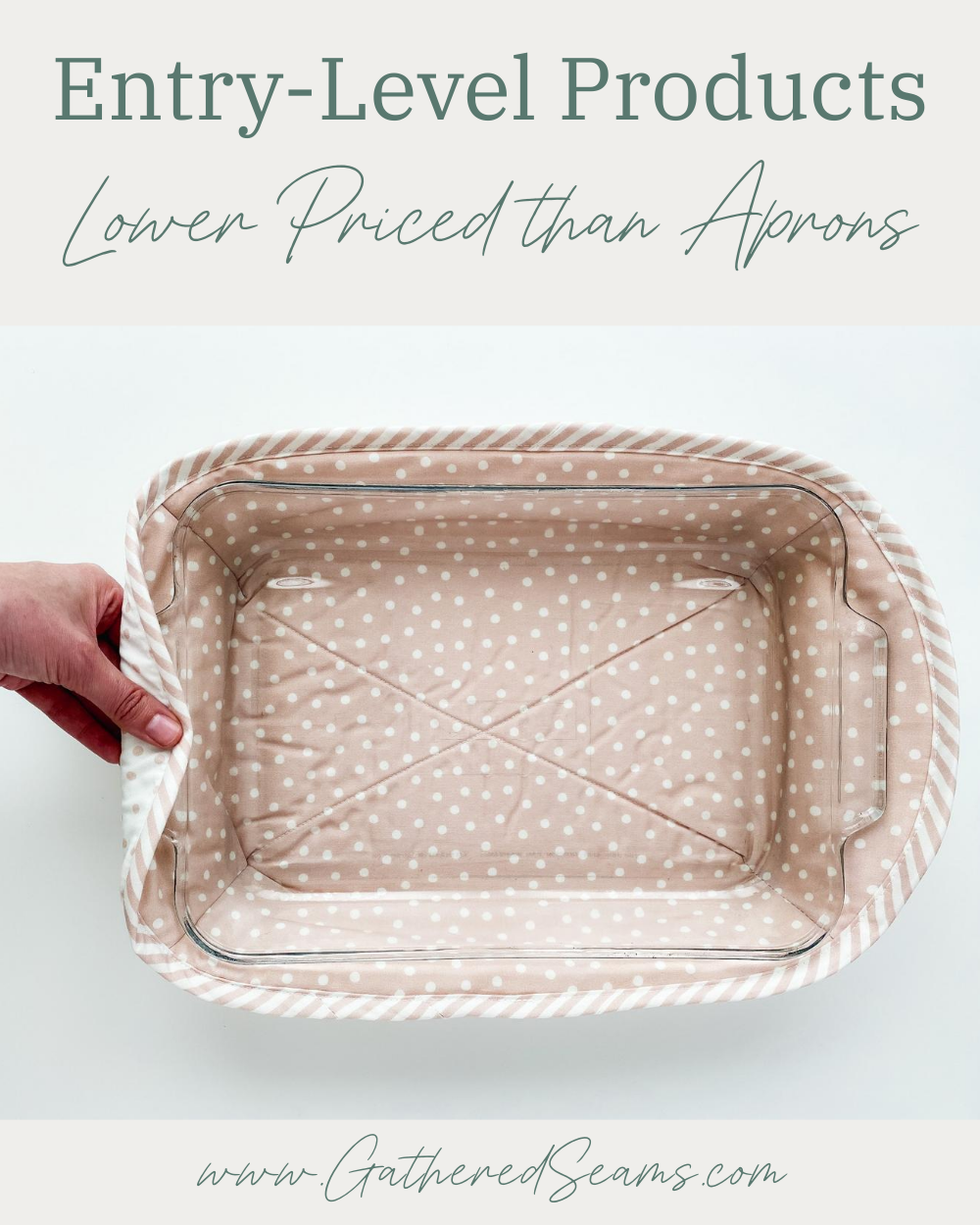
- Reusable bowl covers and casserole covers
- Chef’s hat
- Dish cloths
- Drying mat
*Follow the links above for the free printable patterns.
You don’t need all of these items in your product line. Start with one or two and expand as your business grows.
3 – Upsell Products
These products are for the people who want an upgrade. They may have the desire and budget for the best of the best when it comes to aprons (or other products in your line). Or they may be buying a gift and have a higher budget in mind.
You can take any of your (more popular) products and create higher-end/better versions of them.
Upsell products could be aprons, oven mitts, pot holders or pot pinchers that are:
- Linen or canvas (or a higher quality material than your regular items)
- More detailed (e.g. ruffles, pockets, embroidery, personalization/monogrammed, etc.)
4 – Entry-level Products
These are similar to your add-on products (and can even be the same as your add-on products).
I like to think of entry-level products as going in the opposite direction from up-sell products; they’re the lower-priced option when someone’s budget doesn’t allow them to buy a core product.
In this product line, entry-level products are the same as add-on products, but simply presented differently.
For add-on products, I would sell oven mitts, potholders, etc., individually.
For entry-level products, I would sell them as sets:
- set of two oven mitts
- set of two potholders
- set of two pot pinchers
- set of two pot lid holders
- set of two (or three) tea towels
- set of three bowl covers
- etc.
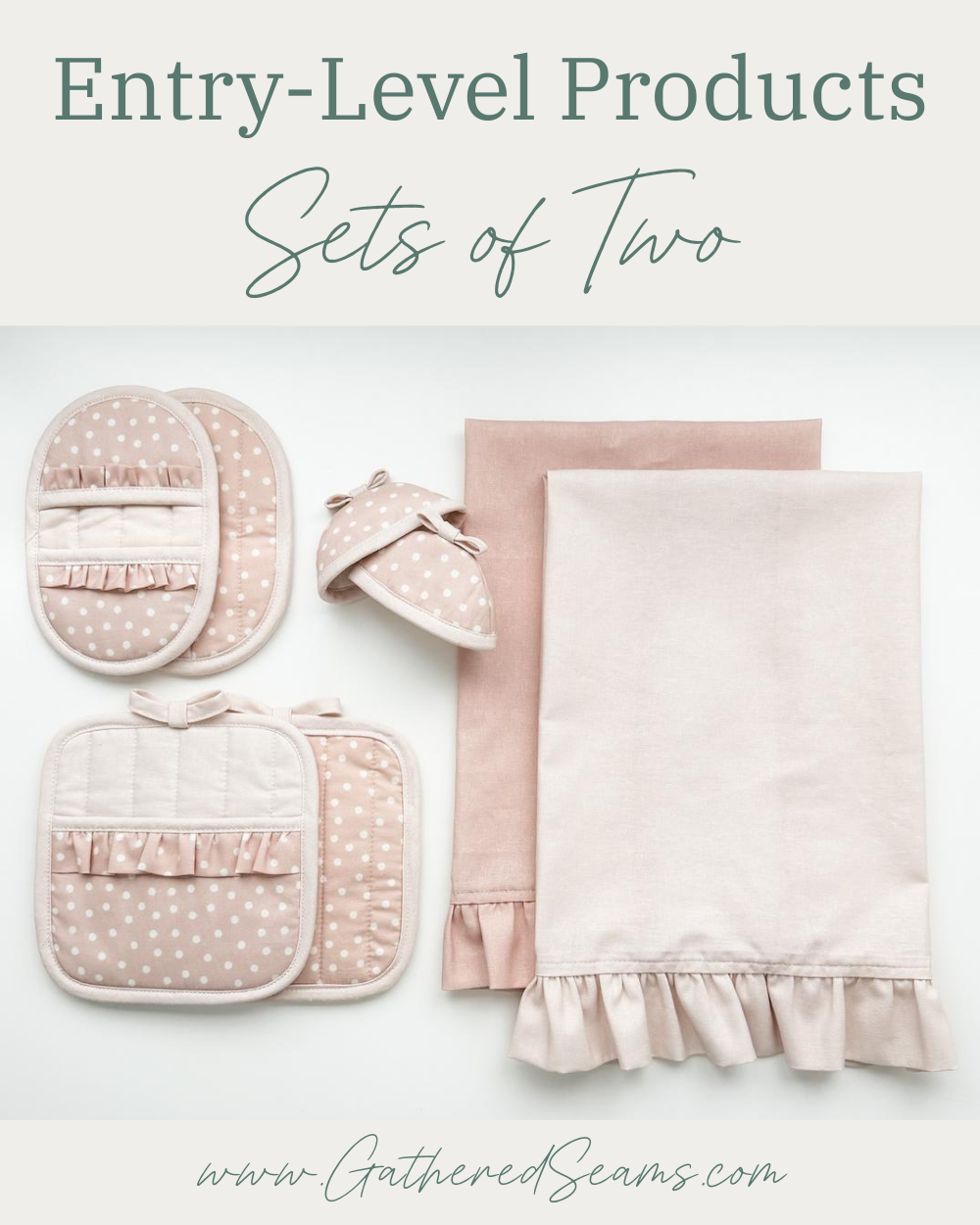
I could also introduce new products into my line for my entry-level items. The key is for these items to be more affordable than my core products. Core products are what most of your target market aspires to buy. But entry-level products can tide them over until they’re ready to invest in a core product.
I also like to plan entry-level products that feel substantial enough on their own. So customers buying one don’t feel like they’re settling; they’re still getting something they’re excited about.
Products that aren’t low-priced enough to be an add-on product, but are lower than aprons might be:
*Follow the links above for the free printable patterns.
5 – Bundles
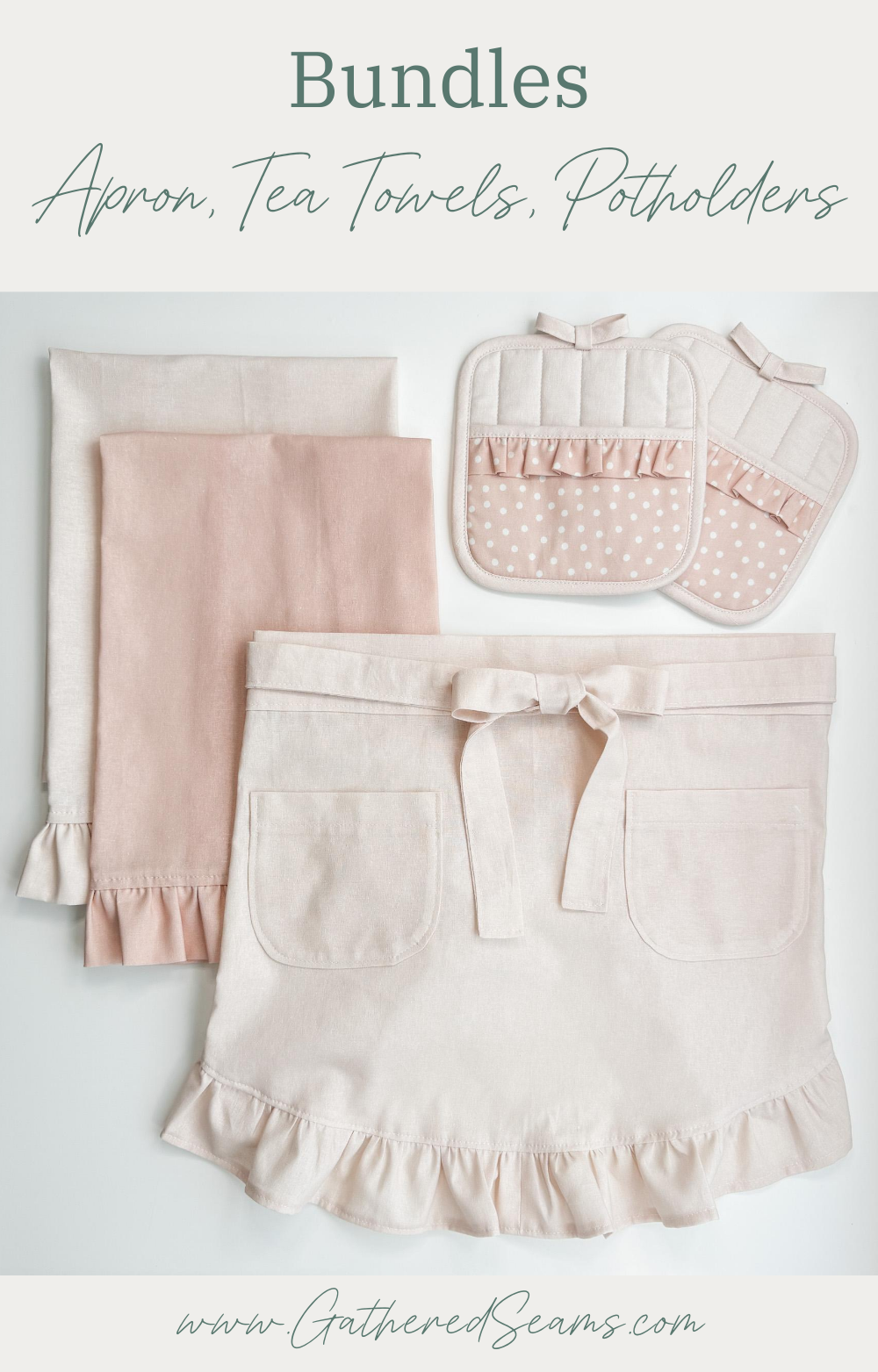
You can use any combination of products to create bundles, which are great for gift-giving and to encourage multi-item sales. They should be items that work together and are commonly bought together.
You can even use information from your sales to guide your bundles. For example, if you notice several people buy a 3-pack of tea towels and potholders together, that could be one of your bundles.
Bundles should be slightly discounted to encourage purchases and generally consist of three or more different products that work well together.
How much you discount your bundles will depend on your profit margins. A 10% – 25% discount is typical for a bundle of products sold together, but you can go higher or lower depending on the size of the bundle and/or your profit margins.
Here are some examples of bundles you can create.
- Apron, oven mitts, and tea towels
- Oven mitts, tea towels, and pot lid holders
- Apron, oven mitts, casserole cozy, casserole cover
Play around with different combos to see what sells. If a grouping of products doesn’t sell, simply take them out of a bundle and sell them individually.
Also consider how you will package your bundles.
Placing them in a gift box with a coordinating ribbon or tissue paper will increase the perceived value and make it gift-worthy.
Shoppers may not look at a group of products as a gift, but when they see them packaged nicely, their minds will go to “gift”, which can get them thinking about upcoming events they need to buy gifts for. And when they’re already packaged as a gift, it takes one more task off their list (having to wrap the items).
It doesn’t take dozens of products and product options to build a successful business.
You can start with:
- Core product: Cotton aprons
- Add-on: Oven mitts & tea towels
- Upsell: Linen aprons
- Entry-level: Sets of oven mitts, 3-packs of tea towels
- Bundles: Apron, oven mitt, and tea towel
That’s only 3 different products simply made with different materials or presented/bundled differently.
You can offer each item in 3-5 options (e.g. pink, blue, green, gray, and white, or a striped fabric, a polka dot fabric, and a plaid fabric) and that gives shoppers 9 – 15 purchasing options. That’s enough to fill a craft show table or online shop to start.
Start small, track stats (e.g. sales, conversion rates, profits, etc.), and then use those stats to guide what you make more of, what you make less of, and what to introduce next.