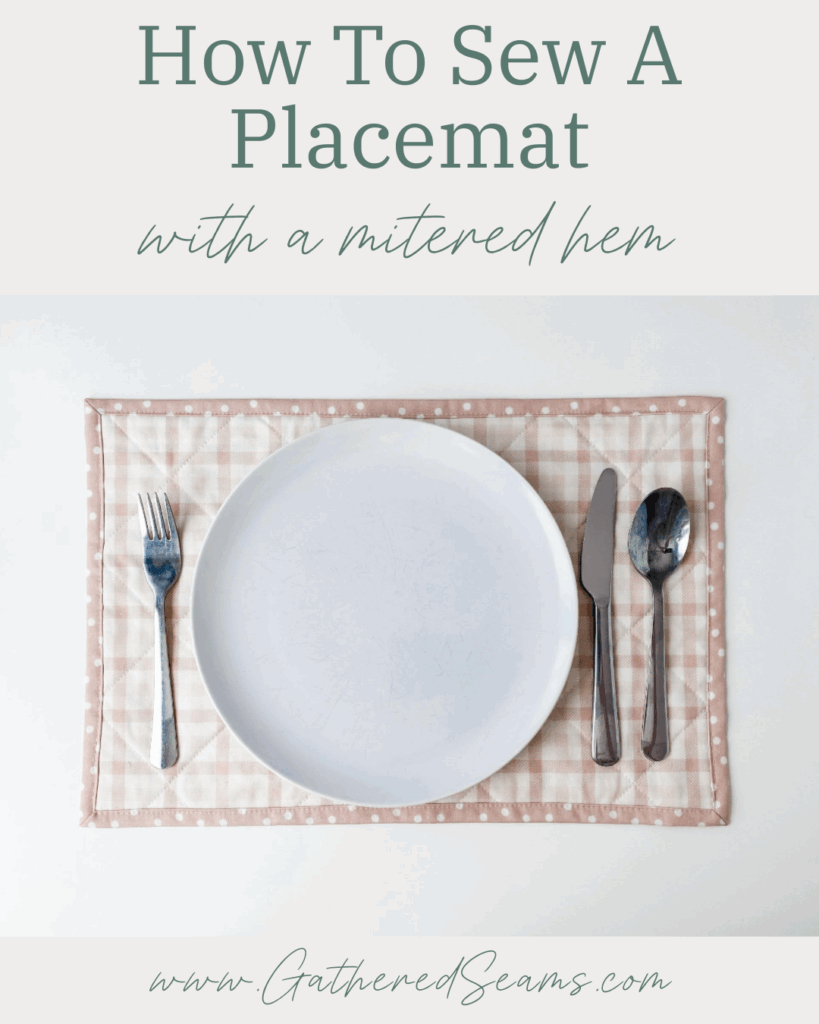
How To Sew a Coaster with Mitered Corners to Sell
PINABLE IMAGE
This is a simple sewing project that can be completed in 10 minutes, making it a great item to sew and sell at craft shows or on Etsy.
Please download the free pattern and instructions below and watch the video for step-by-step instructions and tips for making your coasters look more professional.
DOWNLOAD THE FREE PATTERN HERE BUTTON
VIDEO
IMAGE
Materials
- Fabric
- Batting
- Thread
Material suggestions
A variety of materials can work for coasters, but below are a few tips to help you choose the right ones.
- Not too thick – choose a fabric that’s mid to lightweight so your coaster doesn’t become too bulky.
- Soft and smooth – you want drinks to sit flat, and the bottom of the coaster should help protect furniture from scratches.
- Absorbent – when sewing your coasters to sell, you want to be confident they will protect your customers’ furniture. It’s a good idea to use a natural fibre fabric such as cotton or linen, to ensure any condensation from drinks will be absorbed by the coaster and won’t simply bead off it and onto a table.
- Insulation – you also have to assume your customers will be setting hot drinks on the coasters, so be sure the batting is insulating (e.g. cotton batting or Insul-Bright)
Tools
- Sewing machine Scissors
- Fabric clips
- Fabric marker
- Temporary fabric glue (optional)
- Point turner (you can use a chopstick or knitting needle)
- Iron
VIDEO
DOWNLOAD PATTERN
Written instructions and photos are below.
Sewing coasters to sell
These coasters with mitered corners are a great product for you to consider selling because they’re:
- low-cost – they require minimal materials and time to make
- an everyday-use item – coasters are a basic product that most people use, making them easier to sell.
- a good gift item – these can be packaged and presented as a giftable item.
- an entry item – coasters are a small, low-priced item, perfect for people to test out your products if they’re not ready to buy a higher-priced item.
Tips for a more professional finish
- Pressing – pressing is the key to making your sewing look more professional. Press your fabric before you start cutting to ensure your pattern pieces are accurate. Use steam and/or water to get stubborn creases out
- Lines – if keeping your seam allowance and top-stitching even is challenging, try using a temporary fabric marker to draw your lines on your fabric. Then use these lines as guidance while you sew.
- Top-stitching – choose a longer stitch length when top-stitching. A longer stitch makes it easier to sew straight lines and will give a more professional finish.
- Glue – temporary fabric glue will help keep fabrics in place while sewing.
Selling at craft fairs
When selling coasters at craft shows, consider:
- Coasters are small items, so you’ll need to add other products to your line to fill your table.
- Craft shows attract a variety of people, so you’ll want to stick to your brand/signature style, but offer options.
- The lower price points mean you’ll need to sell dozens, if not hundreds, of coasters to cover your booth fee; another reason you’ll need more to your product line.
Selling on Etsy
When selling coasters online, consider:
- Saturation – because coasters are an easy item to sew, it means more businesses will offer them. It’s essential to enhance your skills (so you can create designs beyond the beginner level) and refine your USP (unique selling proposition).
- Standing out – you’ll be competing with hundreds, if not thousands of other sellers in your product category when you sell online. So it’s important you develop a brand, style, and USP that helps you stand out.
- Shipping – fewer people want to pay shipping fees for smaller items. Coasters are more likely to be added to and shipped with a bigger purchase. You may want to adjust your prices to cover some or all of the shipping fees, so shoppers don’t abandon their cart when they see the shipping fees.
- Shopping behaviour – if a product is more basic/simple, consumers are more likely to buy it in person at the grocery store or mall. They’ll go online when they’re looking for more of a specialty product that’s harder to find, such as:
- personalized coasters
- sustainable costers
- coasters to fit their home decor style (e.g. modern farmhouse-style coasters)
How to sew a coaster with mitered corners
Step 1 – Press Fabrics & cut pattern pieces
Before cutting out your pattern pieces, press your fabric with steam to ensure you have a flat piece of fabric.
Place your paper pattern pieces onto your pressed fabric and cut.
Step 2 – Attach batting to fabric
Take your smaller square of fabric and, if using fusable fleece, use an iron to attach the fleece to the wrong side of the fabric.
If you’re using regular cotton batting, you can use temporary fabric glue, or a basting stitch 1/4″ away from the edge of the fabric to secure the two pieces together.
Step 3 – Press edges
Take your larger piece of fabric, fold one edge in toward the wrong side of the fabric 1/2″ and press with your iron.
Repeat this along all 4 sides.
Step 4 – Mark a 45-degree angle
This step is a little harder to explain, so please watch the video if it’s not clear.
With your 1/2″ hems folded in, fold your square in half diagonally with right sides together.
Line up the edges perfectly and ensure you have a perfect point in the corner.
Now fold the center of the fabric over again, this time lining the folded edge up with the raw edge of the 1/2″ hem.
This will create a 45-degree fold near the top corner.
Trace along the fold with a fabric pen.
Repeat this step on all 4 corners.
Step 5 – Sew 45-degree corners
Keep the 1/2″ hem folded in and fold your square diagonally again, placing right sides together.
Make sure you can see the line you drew with your fabric pen and ensure your edges are lined up perfectly.
Now you’ll sew along the 45-degree line.
Use a shorter stitch and start with your needle on the fabric, then backstitch to sew to the first edge. This will ensure your thread doesn’t get knotted.
Sew along the line, then backstitch at the end.
Step 6 – Snip corners and turn
Cut off the excess fabric in the corners, leaving only a few millimetres for seam allowance to reduce the bulk inside the corners.
Turn the corners in and use a point turner to fully push the corners out.
If you don’t push the corners fully out, you won’t get a clean mitered corner.
Step 7 – Set smaller square inside
Take the smaller square and, with the right side facing up, place it inside the larger square with mitered corners.
Work it in so that the edges of the small square are flush with the edges of the big square.
Step 8 – Press coaster & topstitch
Once the smaller square is set evenly inside, press the edges.
Topstitch around the inner edge of the 1/2″ hem
Now it’s time to sell your coasters!
If you can make a square coaster, you can make:
Placemat
Want to develop your skills? Try making:
a coaster with mitered corners
round coaster with bias tape