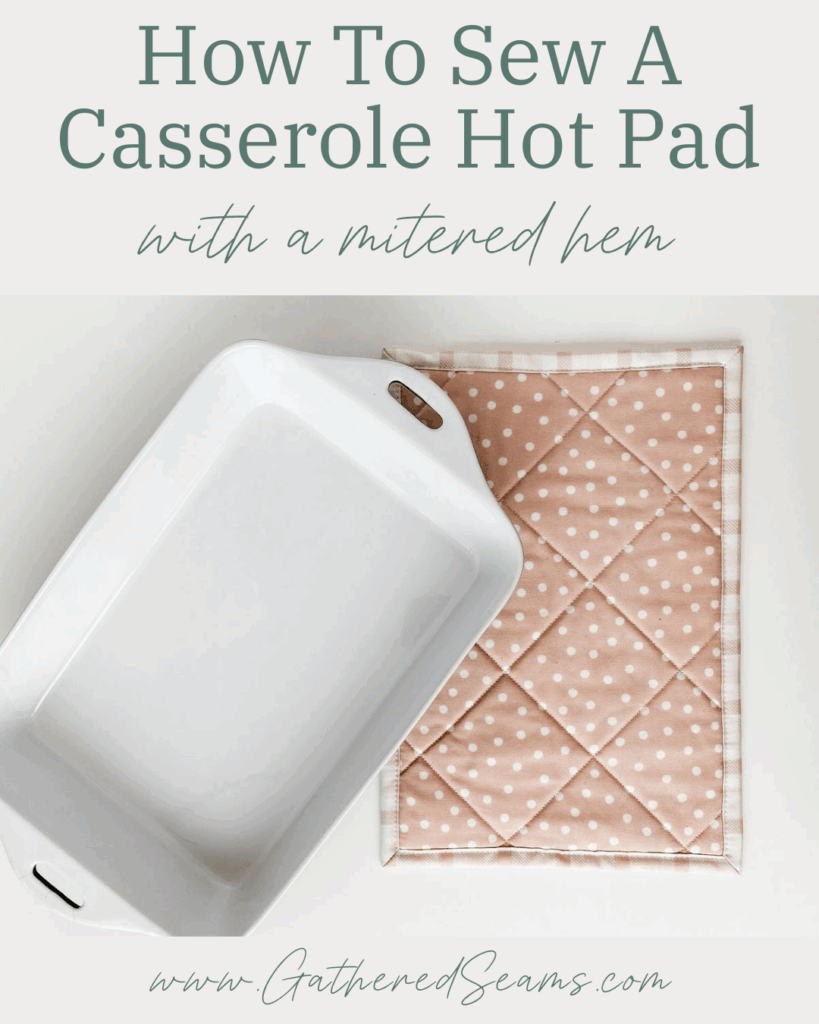
How To Price Hot Pads & Potholders to Sell
If you’ve made a hot pad or potholder and you want to start selling them, you first must determine if you can keep your costs and wages low enough to profit.
This article will start with the basics of pricing a hot pad/potholder, what you should consider, and different pricing strategies.
TUTORIAL >>>>
Hot Pad/Potholder pricing strategy
Hot pads and potholders range in price, which can be based on factors such as:
- Target market – if you’re making hot pads to market as gifts, consumers may not want to pay as much as eco-conscious shoppers who want hot pads made of organic, sustainable materials for their eco-friendly home.
- Materials – if you’re using a lower-quality material (e.g. quilting cotton) and batting with minimal protection, you won’t be able to charge as much as if you’re using a premium fabric (e.g. organic linen) and batting with more protection.
- Craftsmanship – the more advanced your sewing skills are, the more polished your hot pads/potholders will look, which will allow you to charge more. For example, a basic hot pad with no mitered hem or binding should cost less.
- Branding – you may create a luxury brand and the elements that surround your hot pads/potholders, such as tags, packaging, website design, etc. can increase the price and help shoppers place a higher value on your items.
Consider where your hot pads/potholders will fit within a price range (low, medium, high).
Average production costs for a hot pad
Below is an example of how I would calculate production costs for a hot pad with a mitered hem. This price would slightly increase when using bias tape or making a pot holder (more materials and time). They might decrease if you’re making a basic hot pad (no mitered hem or binding).
>>>>>>>>>>>>
Quilting cotton: $10/yard
2 placemats with 1 yard
= $5 / placemat
Fusible Fleece: $1.99/yard
4 placemats with 1 yard
= $0.50 / placemat
Some materials, such as thread, will be used to make dozens of items. You can either estimate how many placemats you can make with each multi-use material, or, if the costs will be less than $0.01, you can assume those prices will be covered by the markups.
Wages: $15/hour
For a simple design and when batching my work, I can get my time down to about 12 minutes per placemat. So I can make 5 placemats in an hour.
= $3 / placemat
Total Production Costs = $8.50
(Production Costs) $8.50 x 2 = (Wholesale Price) $17 x 2 = (Retail Price) $34
I might bump that price slightly up or down, depending on my overhead costs.
$34 per placemat
If I wanted to lower the cost of my placemats, I would skip the batting, which would give me a price closer to $32 per placemat.
I would bundle my placemats to increase the value per transaction (VPT) and to cater to how consumers tend to buy placemats (i.e. in sets).
Pack of 2 placemats = $64
Pack of 4 placemats = $122
Pack of 6 placemats = $178
Applying a greater discount for bigger packs will encourage more people to buy more.
How to lower costs
If you’re looking at that price and feeling like it’s too high for your target market, you can lower your costs by:
- Using a simpler pattern – mitered hems and bindings add extra materials and time. By simply sewing the top and bottom together, with right sides together and leaving an opening to turn right side out, then top-stitching, you can reduce your materials and time.
- Smaller sizes – stick to the smaller size of hot pads, which may allow you to use your scraps of fabric.
- Fabric choices – you might use a lower-priced fabric for the bottom piece of fabric.
Here are a few general ways to spend less money on materials and time on production (without compromising quality).
- Buy materials in bulk – retailers will often provide discounts when you buy more.
- Watch for sales – I sign up for my favorite fabric stores’ newsletters so I know when they’re having a sale.
- Save on shipping costs – if you buy from online retailers, look for ones that have lower shipping fees, and try to buy in bulk so you meet their free shipping threshold (e.g. spend $150 to get free shipping) or so that you’re not paying as much by having dozens of packages shipped to you in a month, instead of one.
- Batch your work – if you make one placemat at a time, you’ll slow down your production time significantly. Instead, cut fabric for dozens of placemats at once, then sew the first step for all placemats at once, then complete the second step for all placemats, etc.
- Use time-saving tools – As your business grows, invest in tools that help you create products faster. Such as:
- rotary cutter, mat, and fabric weights
- wool mat so I don’t have to get up to press pieces
- point turner to easily turn corners
Costs to Cover
1 – Production Costs & Wages
Money (including wages) you spend on materials that make your products.
For example:
- fabric
- batting
- thread
- sew-in label
- hourly wage for time spent to make the product
2 – Overhead Costs & Wages
Money you spend on business costs and wages outside of production.
For example:
- craft show booth fees
- materials for your craft show display
- Etsy fees
- materials for shipping
- marketing materials (e.g. business cards)
- wages for time spent posting to social media, setting up and selling at a craft show, shipping products, etc.
3 – Shipping (optional)
If you sell online, consider shipping costs.
One way or another, the customer always pays for shipping. It’s either a fee that gets added to their shopping cart total, or it’s built into the product’s price (either partially or fully).
When to put shipping fees in product prices
Imagine you’ve added a $20 item to your shopping cart, and you go to check out and see that shipping is $15. Most people will abandon their cart and decide not to buy from that business.
On the other hand, if you place a $30 item in your cart and are asked to pay $5 for shipping, that seems more reasonable.
It’s easier to increase the perceived value of a product (i.e. get shoppers to think an item is as valuable or more valuable than the price listed through high-quality branding, packaging, photography, etc.).
It’s harder to do that for shipping. No one wants to spend money on shipping; it feels like a penalty.
So it’s often better to increase the price of your products slightly to absorb some or all of the shipping fees.
The customer is paying the same amount at the end of the day, but psychologically, they’ll feel better about, perceivably, all $30 going toward the product, rather than shipping.
Pricing formula
When starting your business, a simple pricing formula is ideal because you don’t know what your monthly and yearly overhead costs and wages will be.
Once you’ve been operating your business, and you know your costs and wages, then it’s important to check back in on your prices to ensure you’re covering all your costs and wages and (eventually) making a profit.
Material + Time = Production Costs
Production Costs x 2 = Wholesale Price
Wholesale Price x 2 = Retail Price
Wholesale Price is the price you will sell your products to retailers at (they typically expect a 50% discount because they buy multiple items in an order and must profit when they resell your items in their stores. Even if you don’t plan to sell your products wholesale to retailers, it’s a good idea to have a wholesale price and retail price because it will allow you to offer discounts and run end-of-season/year sales, and still profit.
This basic formula doesn’t require you to know your overhead costs and wages and to work them into your product’s prices.
It simply assumes that by multiplying each of your product’s production costs by 2, you’ll be covering your overhead costs and wages and making a profit.
It’s important to check in regularly to ensure that’s true and you’re not losing money.