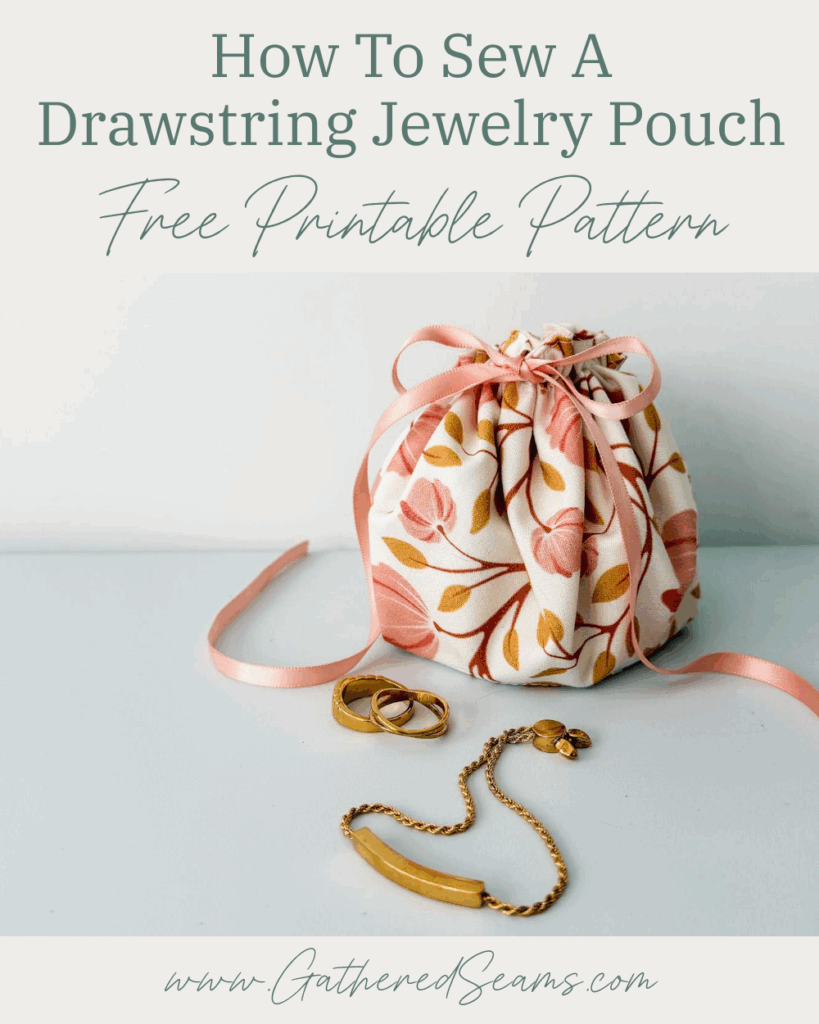
How To Sew A Pleated Triangle Pouch | Free Printable Pattern
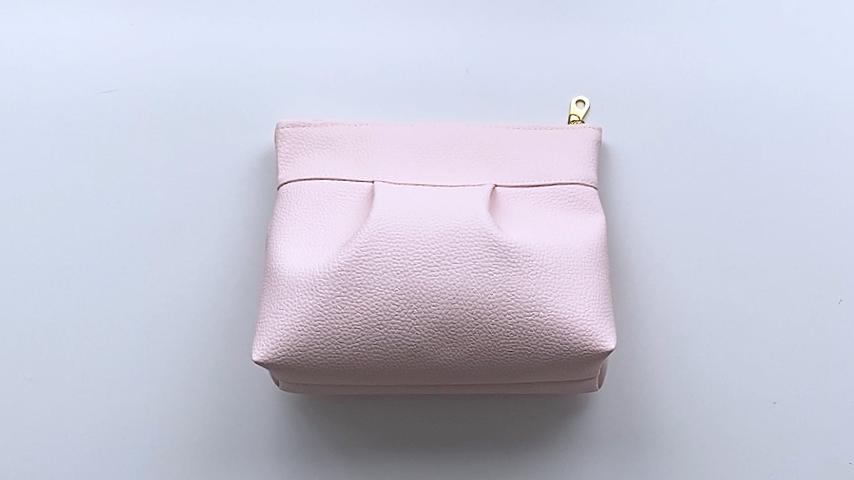
I designed this triangle pouch to match my pleated clutch and to offer a design that’s a little different from the other triangle pouch patterns out there.
Triangle pouches are a popular style of bag because they’re perfect for organizing, packing, or storing smaller items such as toiletries or makeup.
If you know how to sew in a zipper, this is an easy pattern to follow.
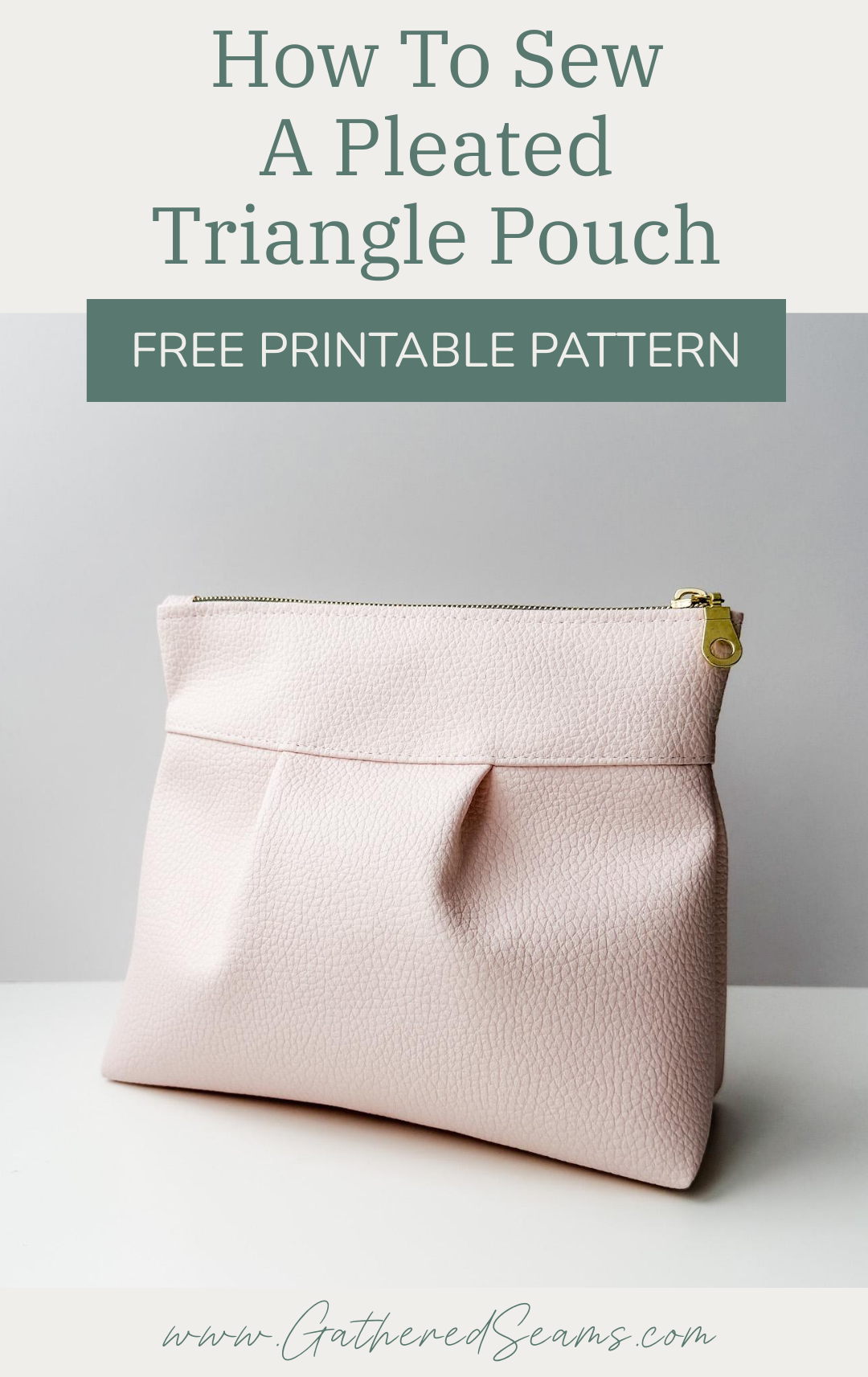
Sewing the pleated triangle pouch to sell
Triangle pouches tend to be a popular item at craft shows because they’re so handy…many people will purchase them for personal use, or they make a great gift.
They don’t require a lot of time or materials to make, and they’re a perfect add-on item when selling larger purses or bags.
Be sure that you choose a color scheme, fabric, and print that appeal to your target market, and that coordinate with the other bags in your product line, so customers can mix and match to create a set.
To add to your product line, choose items to sew that are likely to be used with your triangle pouch.
That might be other bags, such as a tote bag or a weekender bag. Or you may go in the direction of makeup-related items, such as:
- other sizes of makeup bags
- reusable cotton pads
- spa headband (for washing makeup off)
- scrunchies (to keep hair out of the way when doing makeup)
- etc.
Or travel items, such as other bags to help pack and organize the contents of a suitcase.
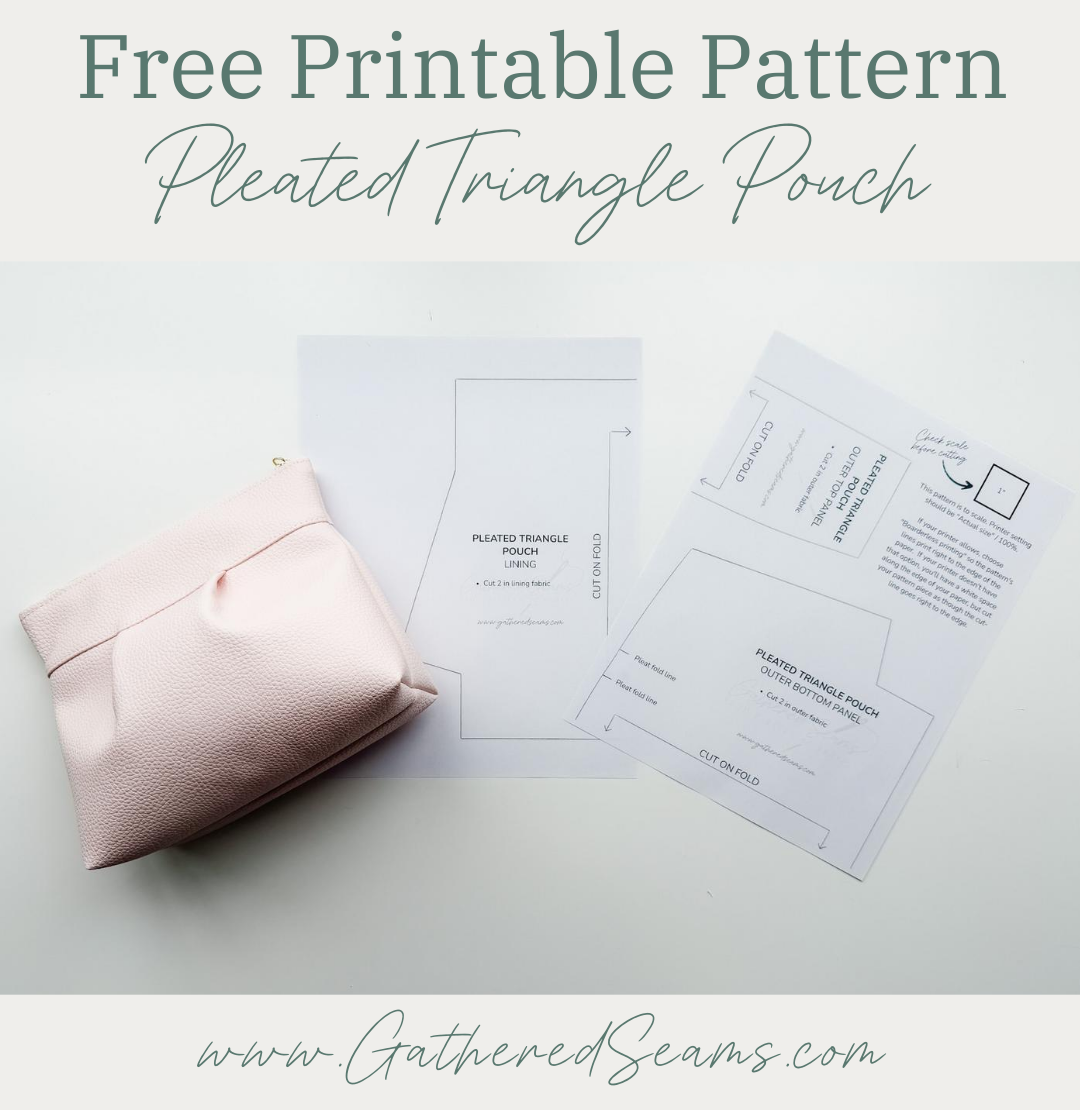

Materials
As an Amazon Associate, I earn from qualifying purchases (see full disclosure here).
- Exterior fabric – a heavier-weight fabric is ideal (such as vinyl, denim, canvas), or you can add interfacing for more structure
- Lining fabric
- Thread
- #5 zipper
Tools
- Sewing machine
- Walking foot (highly recommended if you’re sewing with vinyl. This is the universal one I purchased for my Baby Lock, which is a different machine than what’s shown in the photos)
- Clips
- Temporary fabric marker (these are the ones I use)
- Ruler
- Scissors
- Soft-faced hammer (optional; helps flatten seams when working with vinyl; use it in place of an iron for “pressing” seams)
- Hump jumper (optional; helps your sewing machine get over thick seams or zipper teeth)
Step 1
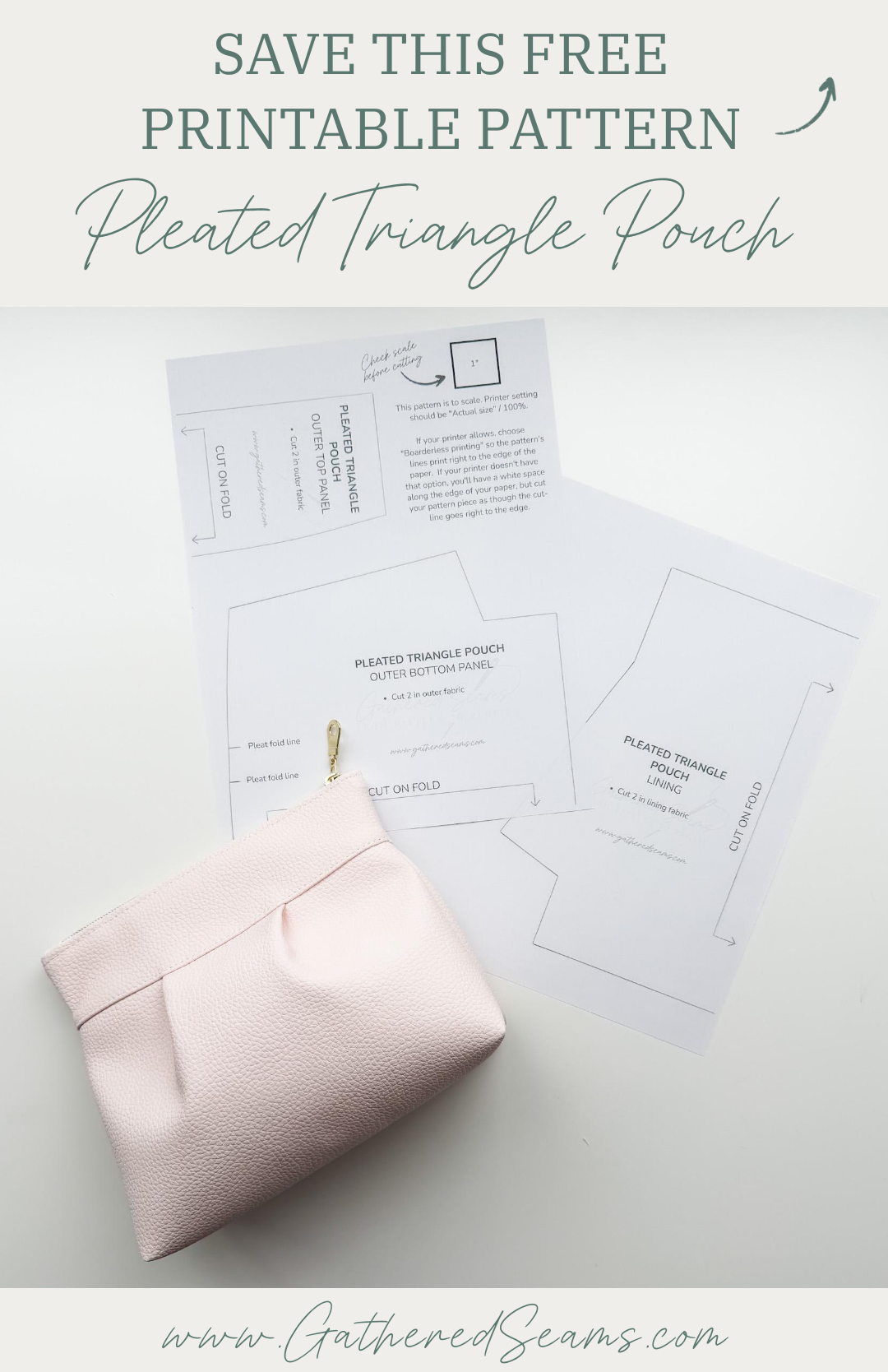
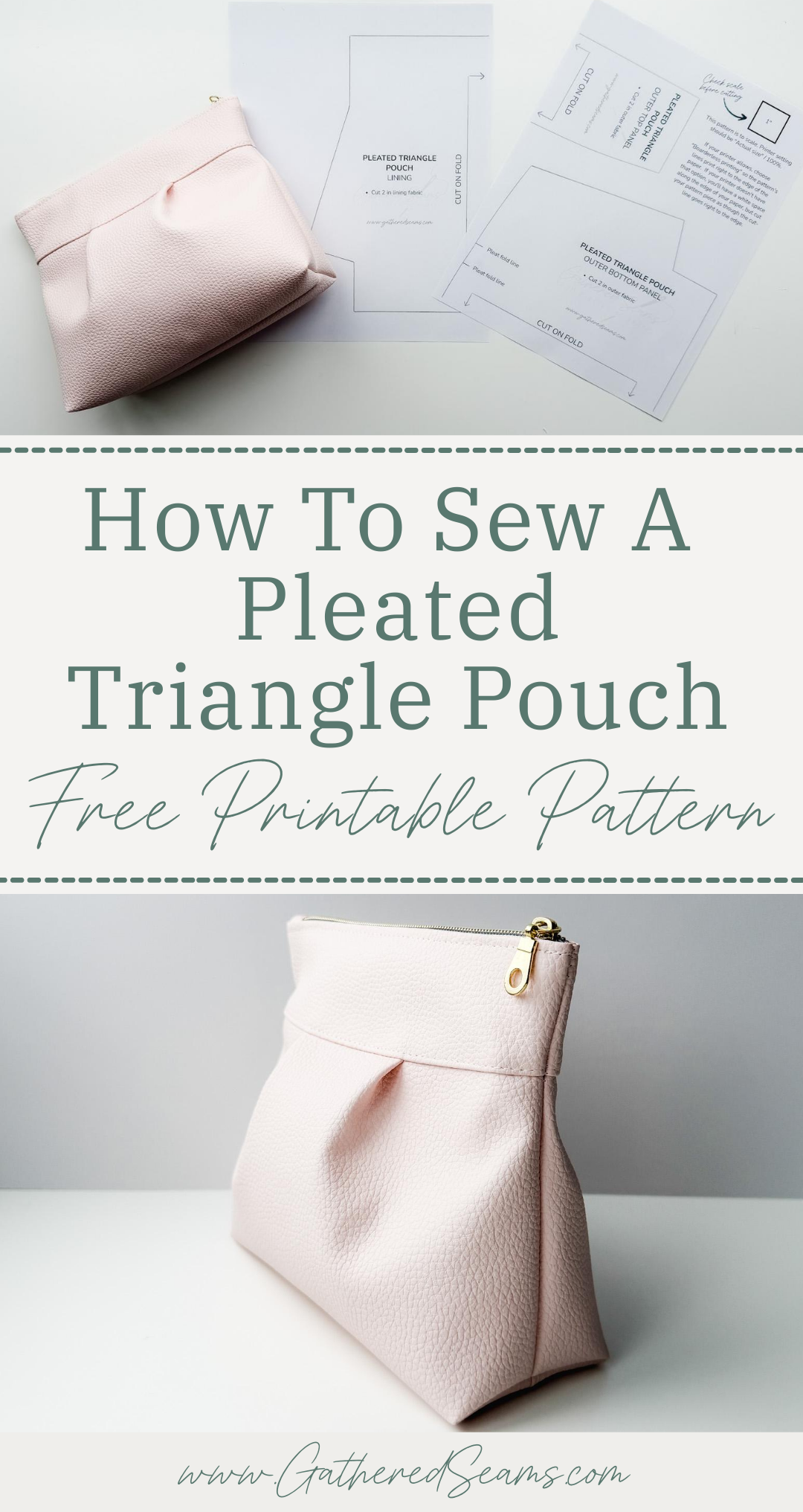
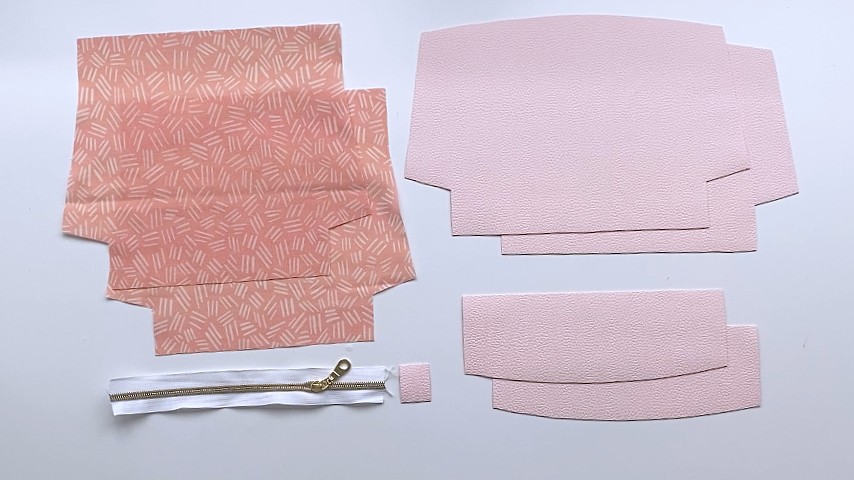
Download the free pattern and cut out the pattern pieces.
In addition to the pattern pieces, you’ll also need:
- #5 zipper cut to 8″ long
- A 1-1/4″ x 1″ piece of exterior fabric for the zipper end tab (if you’re using a fabric other than vinyl, cut it to 1-1/4″ x 2″ so you can fold in the cut edges.
This pattern uses a 1/2” seam allowance unless mentioned otherwise.
Step 2
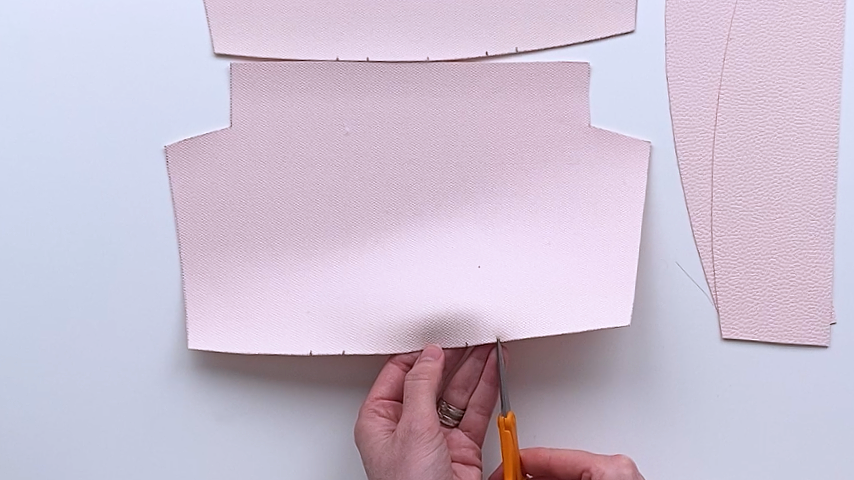
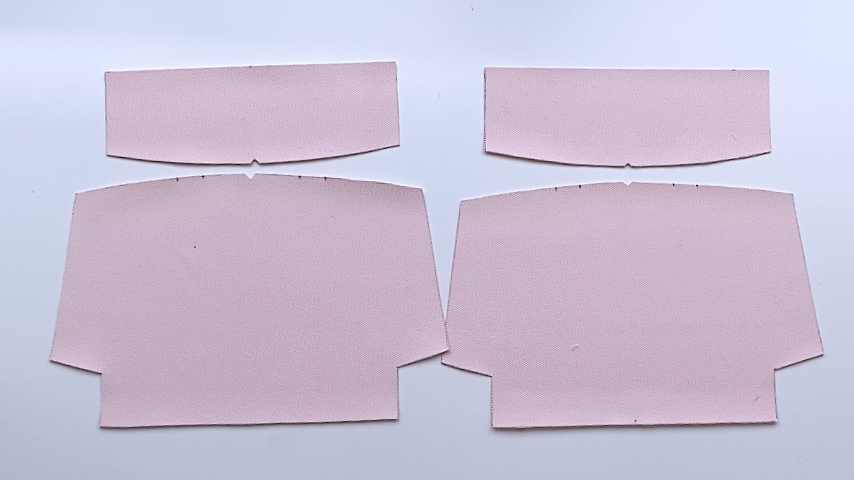
Begin by making small clips where the “pleat fold lines” are indicated along the top of the outer bottom panel of the pattern piece (or mark the lines on the right side of the fabric using a temporary fabric marker).
Then cut notches or use a temporary fabric marker to indicate the centre at the top of your bottom panels and at the bottom of your top panels.
Step 3
Create your pleats on the bottom outer panels by folding the two marked lines together. Make sure your pleats are going in opposite directions.
Simply clip them into place (don’t stitch them yet).
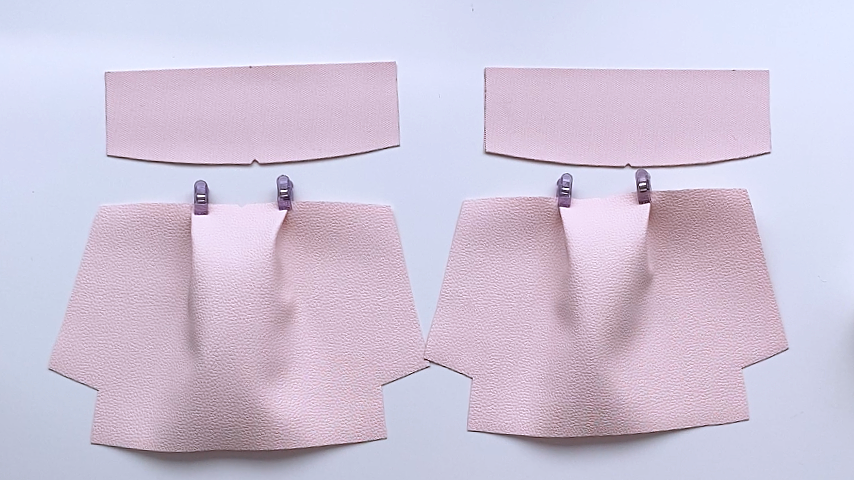
Then place the bottom outer panel on the top outer panel, right sides together.
Line up the centre points and clip into place, then line up the outer edges and clip into place.
Adjust your pleats as needed to ensure your bottom piece is the same length as the bottom of your top piece (depending on the thickness/thinness of your material, you may need to let your pleats in or out a little).
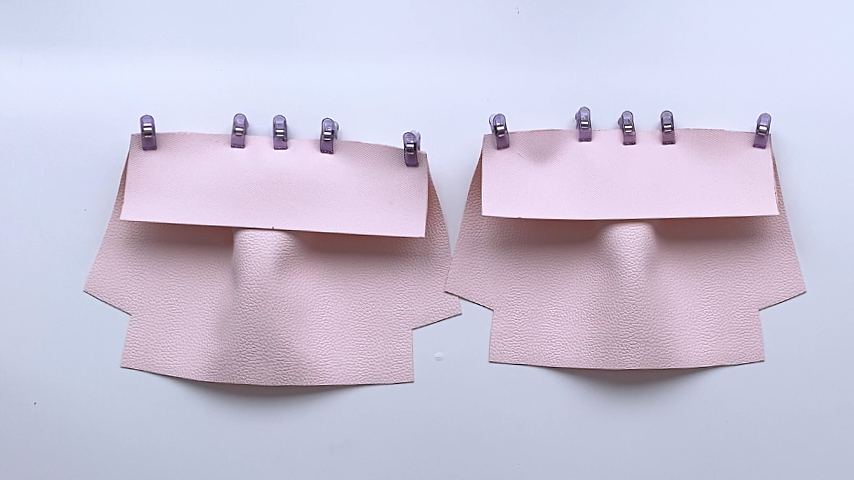
Clip the edges together, then sew together using a 1/2” seam allowance.
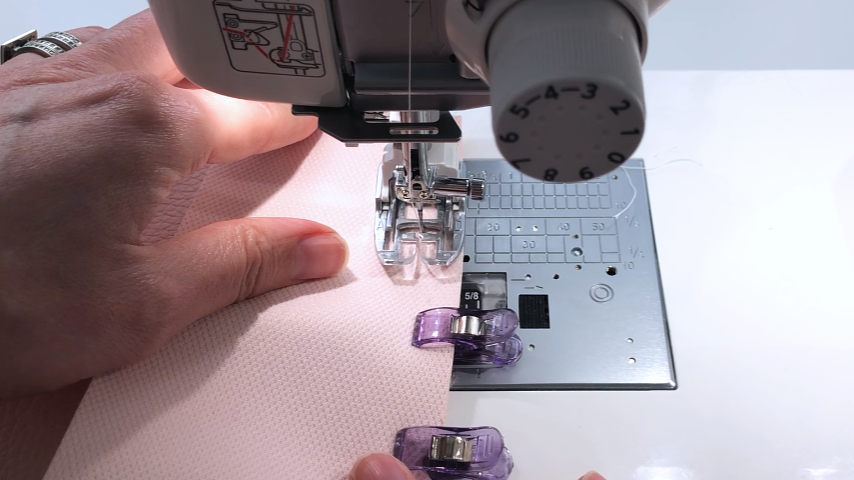
Fold the top panel up and ensure the seam allowance for both pieces is pushed up, so it’s behind the top panel (and not the bottom panel), then top-stitch along the bottom of the top panel to secure the seam allowance into place.
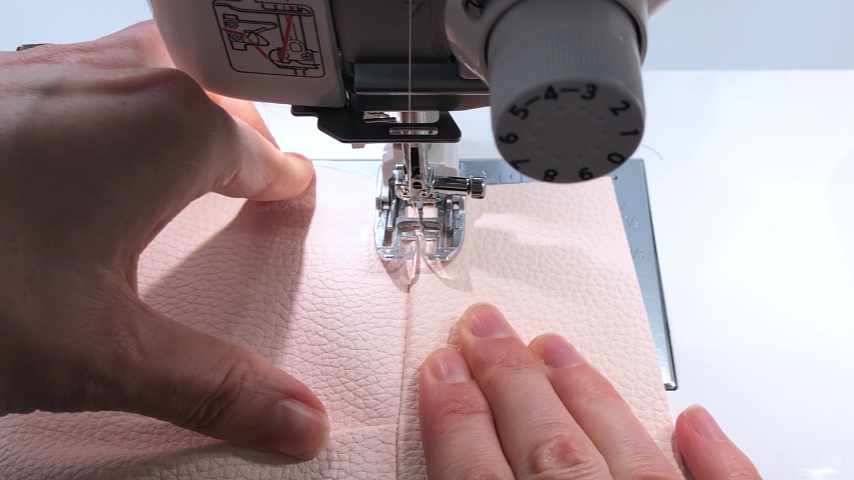
Repeat to sew the other two outer panels together.
Trim the seam allowance.
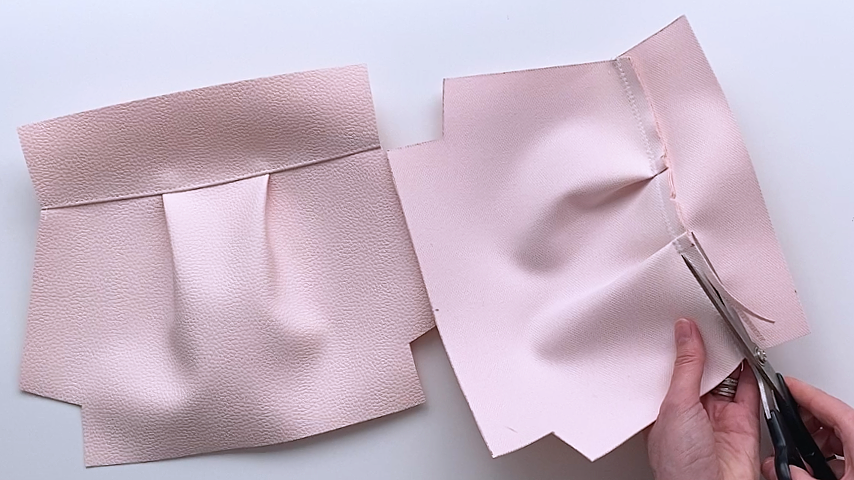
Step 4
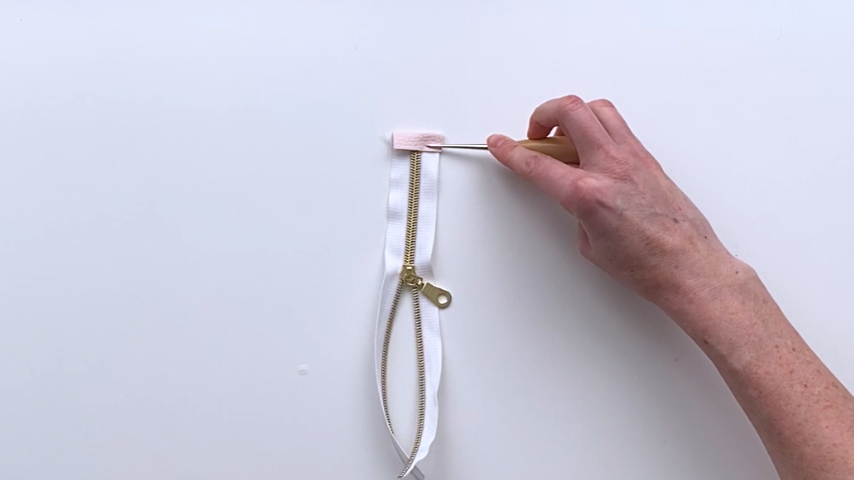
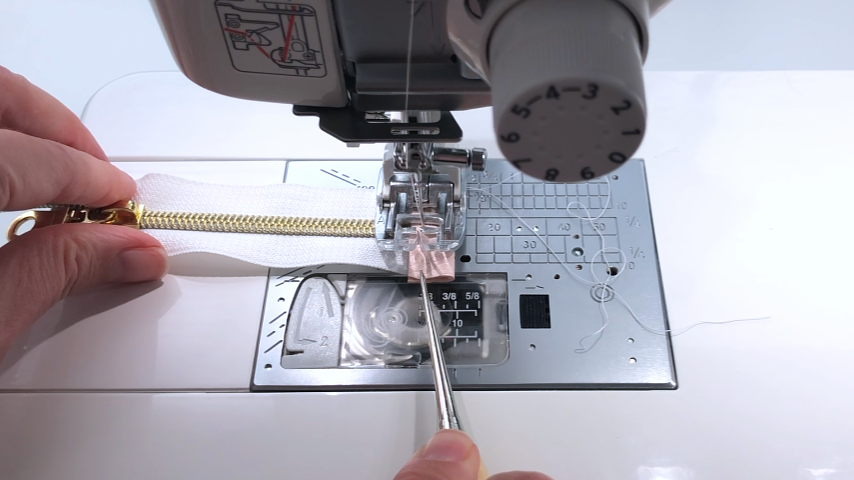
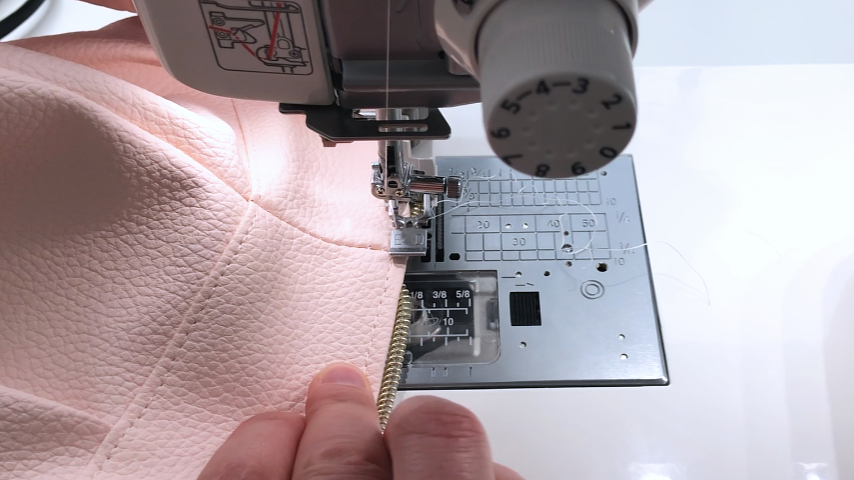
Fold the zipper tab over the closed end of the zipper and topstitch into place.
*If you’re using a woven fabric (that will fray), this tab should be 1-1/4″ wide by 2″ long. Fold in half lengthwise to find the center point, then fold the two ends in to that center crease, then fold the tab in half so it is 1-1/4″ wide by 1/2″ long.
Step 5
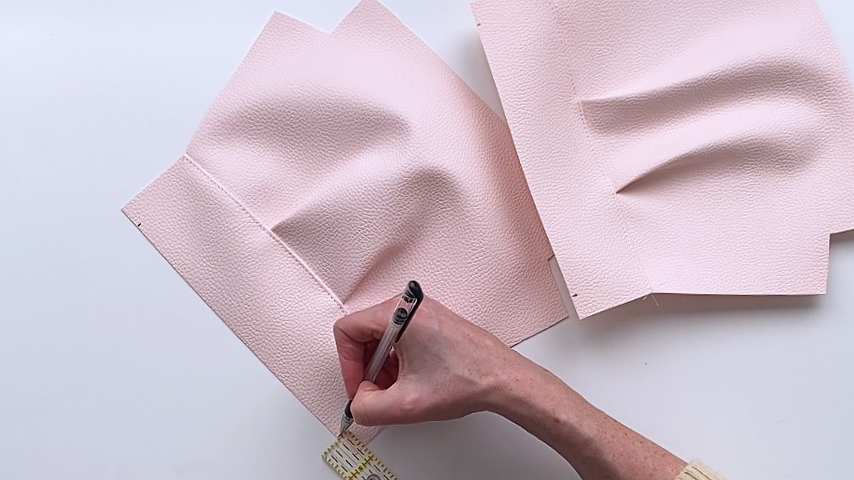
Using a temporary fabric marker, mark two lines on either end of your top panels that are 5/8″ away from the end. Your zipper will start and end within these lines.
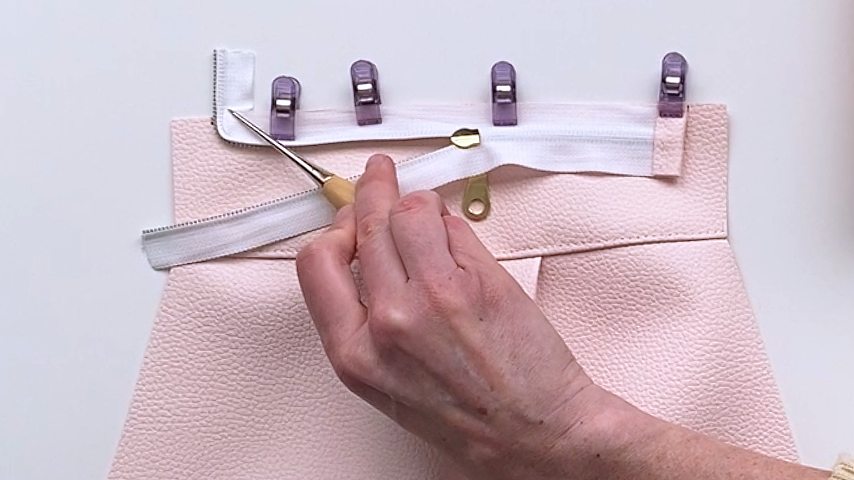
Clip the zipper into place (right side of the zipper placed on the right side of the top panel), and on the open end of the zipper, fold the zipper at a 90-degree angle so that the zipper teeth end right before the mark.
Baste the zipper into place.
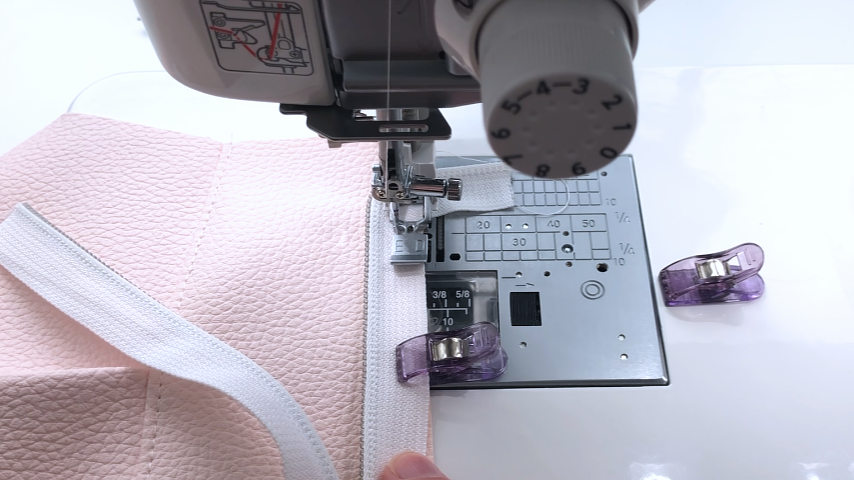
Place the lining right sides together with the outer panel, lining up the top and side edges and clip into place. Then sew into place, using a zipper foot to sew close to the zipper teeth. You may also need to use a hump-jumper to sew over the start and end of the zipper.
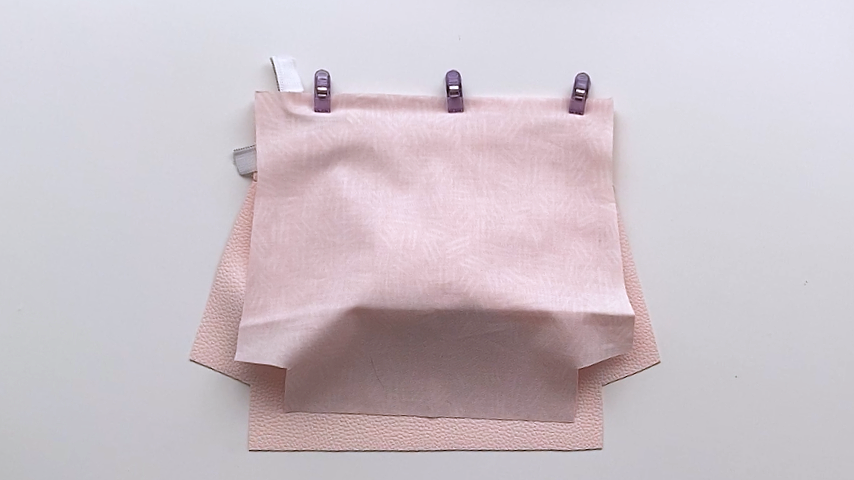
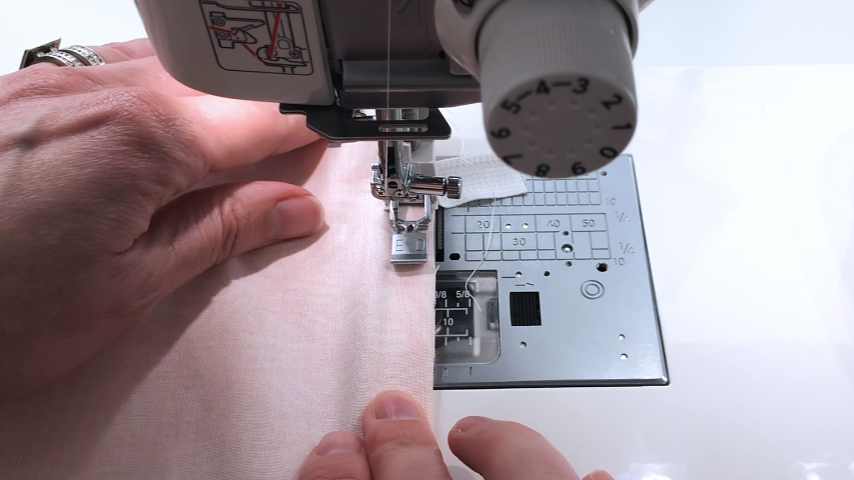
Trim the excess zipper, then topstitch the outer panel, along the zipper. I fold my lining to the opposite side of the outer fabric so I don’t topstitch it. This helps get a cleaner finish at the start and end of the zipper.
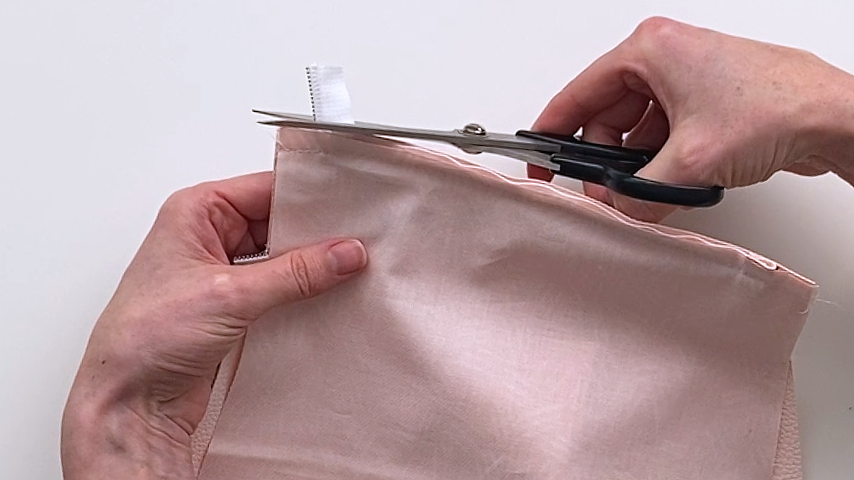
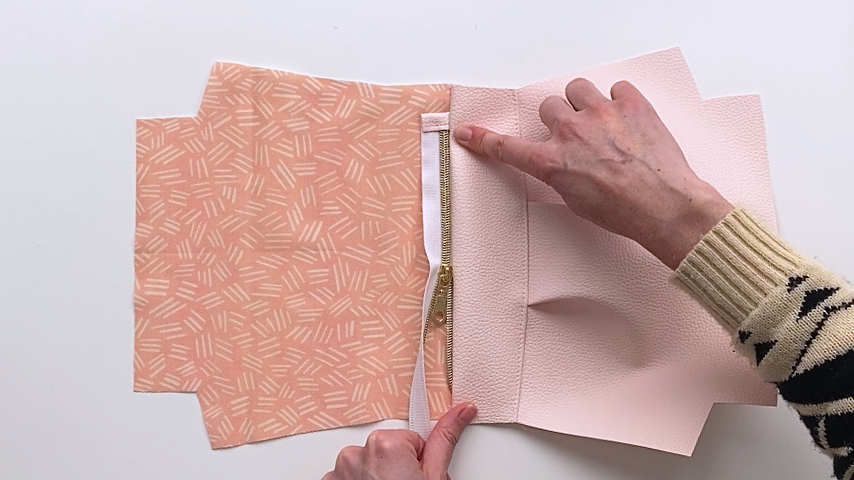
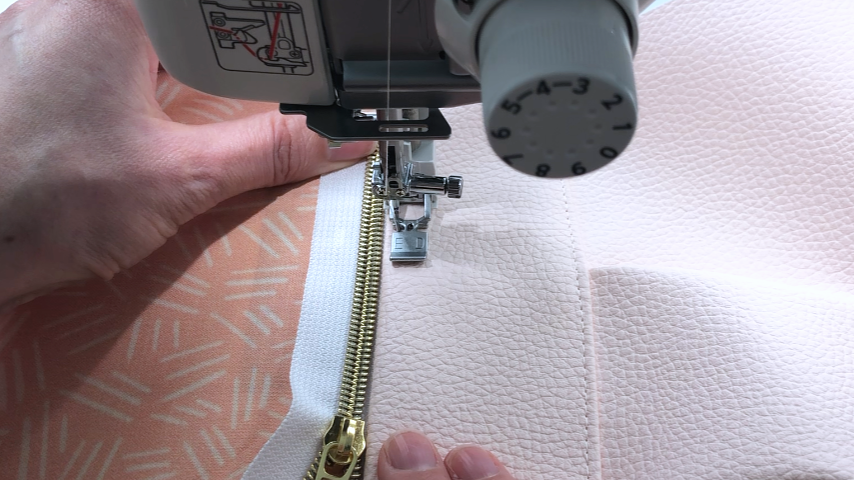
Repeat these steps to sew the other side of the zipper to the other outer piece and lining piece.
Step 6
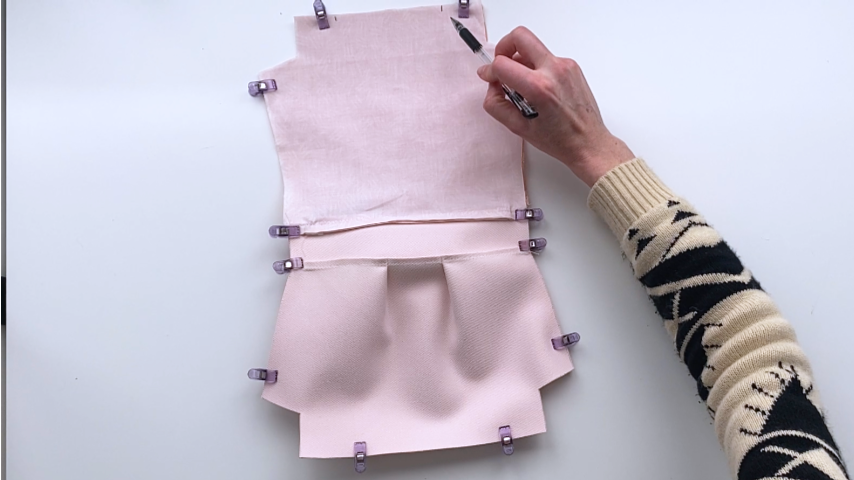
Fold the pieces so that the two outer pieces are right sides together and the two lining pieces are right sides together.
Make sure the top edges of your outer pieces are lining up at each end. Clip into place.
Mark two lines along the bottom of the lining pieces to indicate where you won’t sew, so there is an opening to turn the bag right side out.
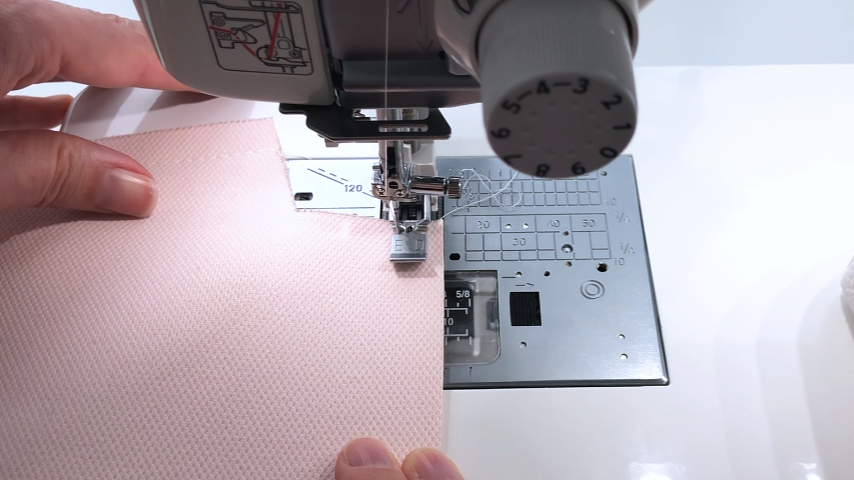
Sew along the sides and bottoms.
Step 7
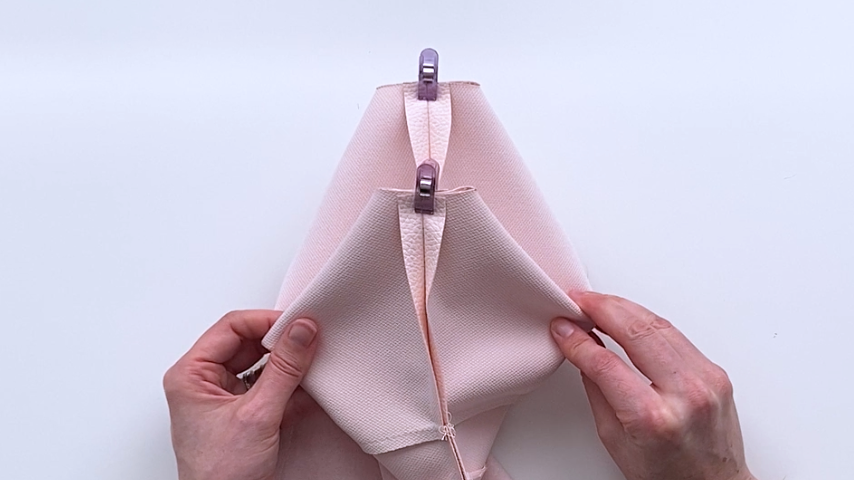
Open the corners and line up the seams (side seam and bottom seam) and clip the corners into place so the top edges line up.
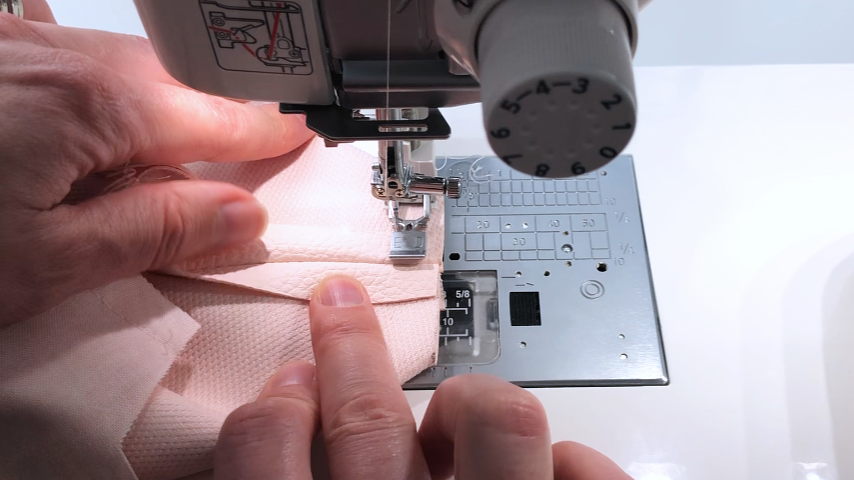
Using a 1/2″ seam allowance, sew the corners closed.
Do this for both the outer bottom corners and the lining’s bottom corners.
Step 8
Trim the seam allowance around the bag, except for where the opening in the lining is.
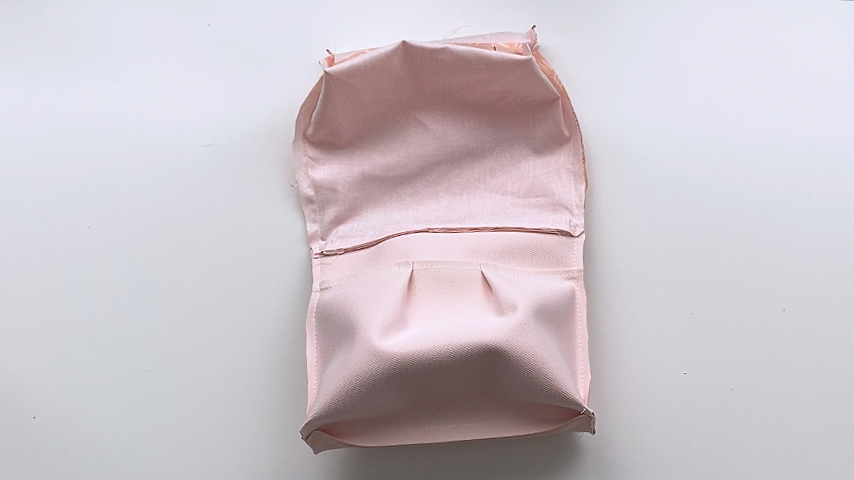
Turn the bag right side out, then sew the opening in the lining closed.
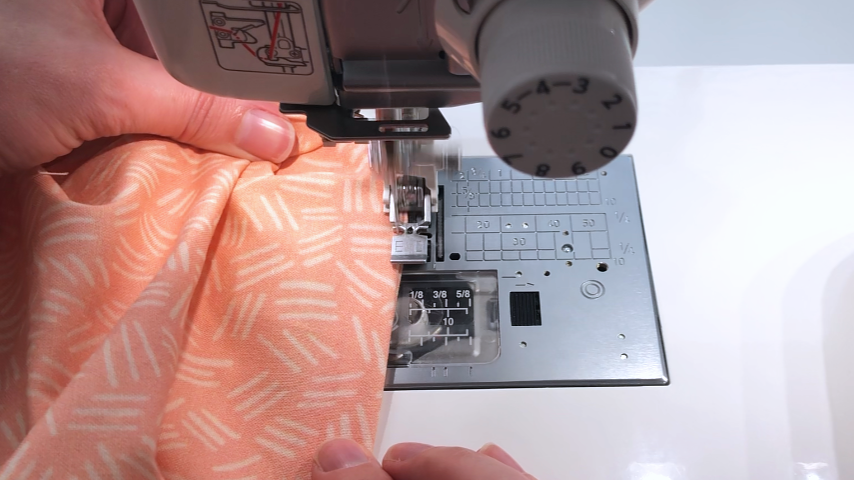
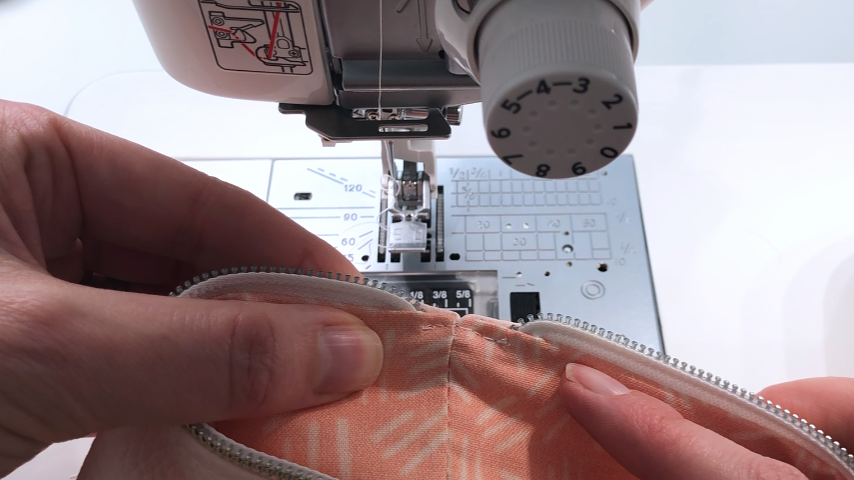
The other thing I like to do to keep the lining in place and help the zipper close all the way, is to sew a short line between the zipper ends.
And your pleated triangle pouch is finished!